
Climate · El Niño · Weather and climate · Drought · Floods · Food security
The 2026-2027 El Niño: what we know
 Illustration
El Niño is still strengthening and is expected to peak towards the end of the year.
El Niño conditions formed in the tropical Pacific in June and have kept strengthening since. NOAA puts the chance of a very strong event this autumn and winter at more than 90%, and the WMO expects it to last through February 2027. Effects are already visible: Papua New Guinea is facing crop failures and water shortages, and UNICEF says more than 347 million children could face unusual drought or flooding by December.
What changed
UNICEF published new estimates of how many children El Niño could affect this year.
Version 1: Story created.
Key facts
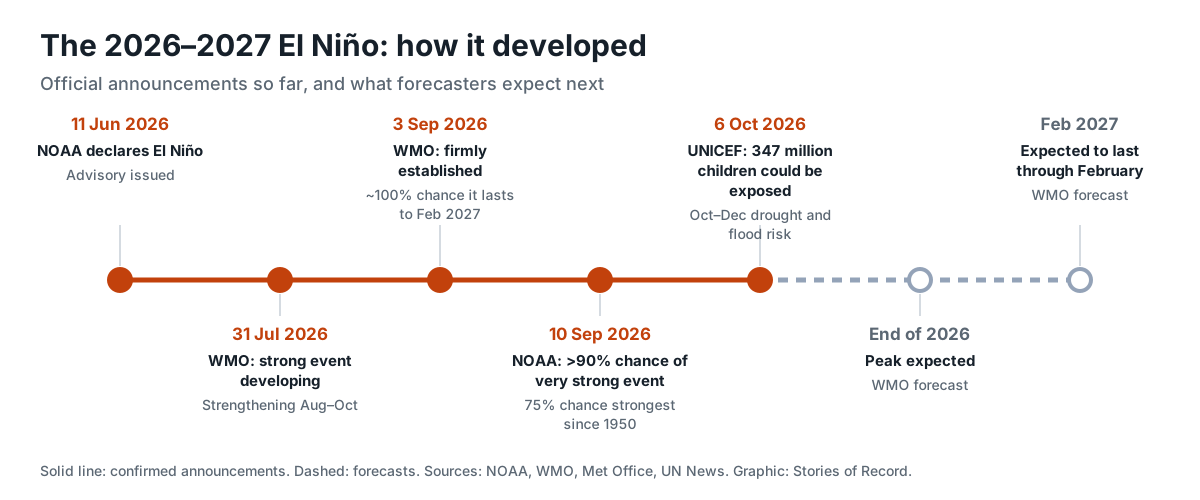
- The WMO said El Niño was firmly established and gave a near 100% chance that it lasts through February 2027. [4] [5]
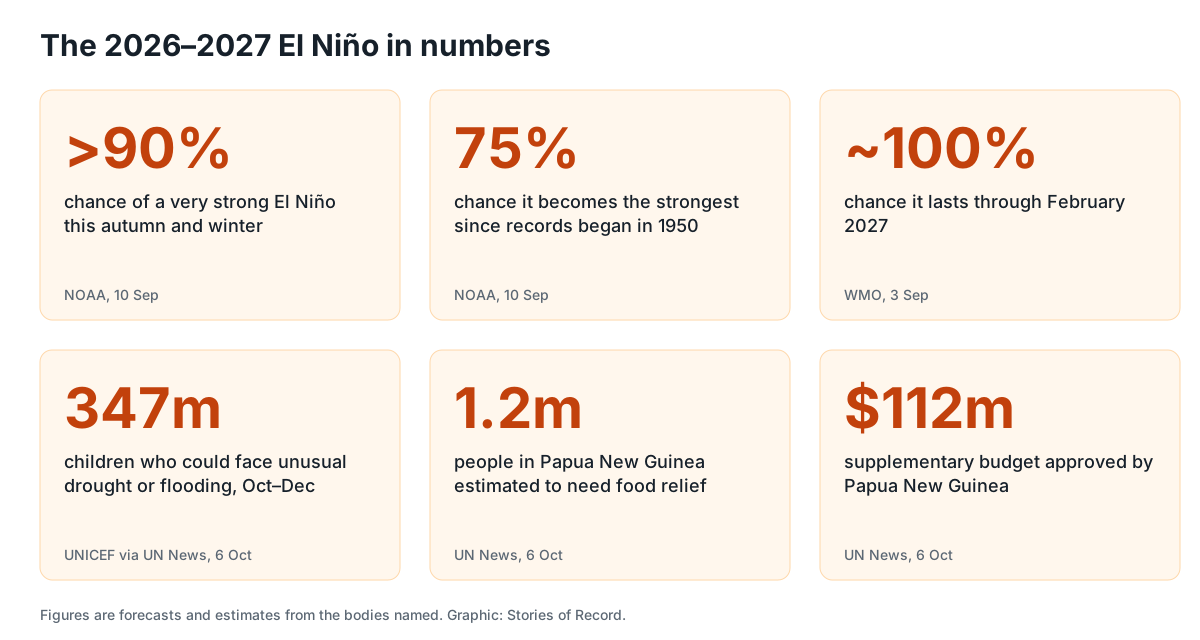
- NOAA put the chance of a very strong El Niño this autumn and winter at more than 90%. [6]
- UNICEF says El Niño could expose more than 347 million children, in nearly 100 countries and territories, to unusually wet or dry conditions between October and December. [7]
Timeline
- UNICEF says El Niño could expose more than 347 million children, in nearly 100 countries and territories, to unusually wet or dry conditions between October and December. [7]
- NOAA put the chance of a very strong El Niño this autumn and winter at more than 90%. [6]
- The WMO said El Niño was firmly established and gave a near 100% chance that it lasts through February 2027. [4] [5]
- The WMO said a strong El Niño was developing and would keep strengthening through August, September and October. [3]
- NOAA declared that El Niño conditions had formed in the tropical Pacific and issued an El Niño Advisory. [1] [2]
What is confirmed
- NOAA declared that El Niño conditions had formed in the tropical Pacific and issued an El Niño Advisory. [1] [2]
- The WMO said a strong El Niño was developing and would keep strengthening through August, September and October. [3]
- NOAA also gave a 75% chance that the event becomes stronger than any El Niño in records going back to 1950. [6]
- In September, the Niño 3.4 index of tropical Pacific sea-surface temperatures went above the readings from every earlier El Niño, including 1997 and 2015. [7]
- The Met Office says El Niño makes dry weather more likely across parts of Indonesia, Australia, India and central and equatorial South America, while some other parts of South America and the southern US tend to turn wetter. [2]
- Papua New Guinea's government declared the event in June, set up a task force and approved a $112 million supplementary budget. [7]
- About 1.2 million people in Papua New Guinea are estimated to need direct food relief. [7]
What is not confirmed
- The Met Office says the heat released by El Niño could make next year the hottest in the global record that starts in 1850. This is a forecast, not an observation. [2]
- How strong the event will finally become is still uncertain, the Met Office says. [2]
Why it matters
El Niño shifts rainfall and temperature far from the Pacific, raising the risk of drought in some regions and floods in others. That affects harvests, food prices, water supplies, disease and global temperatures, and the effects are expected to last into next year.
What happens next
- : NOAA publishes its next monthly El Niño assessment on 8 October 2026. [6]
- The WMO expects El Niño to reach very strong intensity and peak towards the end of the year. [4]
- In Papua New Guinea, the biggest effects on farming and food supplies are expected from November. [7]
Questions
Is El Niño happening now?
Yes. NOAA declared El Niño conditions in June, and the WMO says the event is firmly established.
How strong will it get?
NOAA gives a greater than 90% chance of a very strong event. Whether it becomes the strongest on record is still uncertain.
What is the Niño 3.4 index?
It tracks El Niño by measuring sea-surface temperatures in an area of the tropical Pacific.
How long will it last?
The WMO gives a near 100% chance that it lasts through February 2027.
Sources
- Climate Prediction Center: ENSO Diagnostic Discussion, National Oceanic and Atmospheric AdministrationOfficial (government)Accessed 7 October 2026.
- El Niño declared for 2026 as Pacific warms, Met OfficeOfficial (government)Accessed 7 October 2026.
- Strong El Niño expected to intensify, World Meteorological OrganizationOfficial (government)Published 27 July 2026. Accessed 7 October 2026.
- El Niño/La Niña Update (August 2026), World Meteorological OrganizationOfficial (government)Published 26 August 2026. Accessed 7 October 2026.
- UN warns El Nino could be ‘off the charts’, strongest in decades, Al JazeeraNews organizationAccessed 7 October 2026.
- Climate Prediction Center: ENSO Diagnostic Discussion, National Oceanic and Atmospheric AdministrationOfficial (government)Accessed 7 October 2026.
- From drought to deluge: ‘Super’ El Niño’s expanding reach, UN NewsOfficial (government)Published 6 October 2026. Accessed 7 October 2026.
People, places and organizations
- topic
- El Niño
- organization
- World Meteorological Organization
- organization
- National Oceanic and Atmospheric Administration
- organization
- Met Office
- organization
- UNICEF
- location
- Papua New Guinea