New EU driving licence rules: when the digital licence, driving at 17 and the 4.25-tonne limit apply
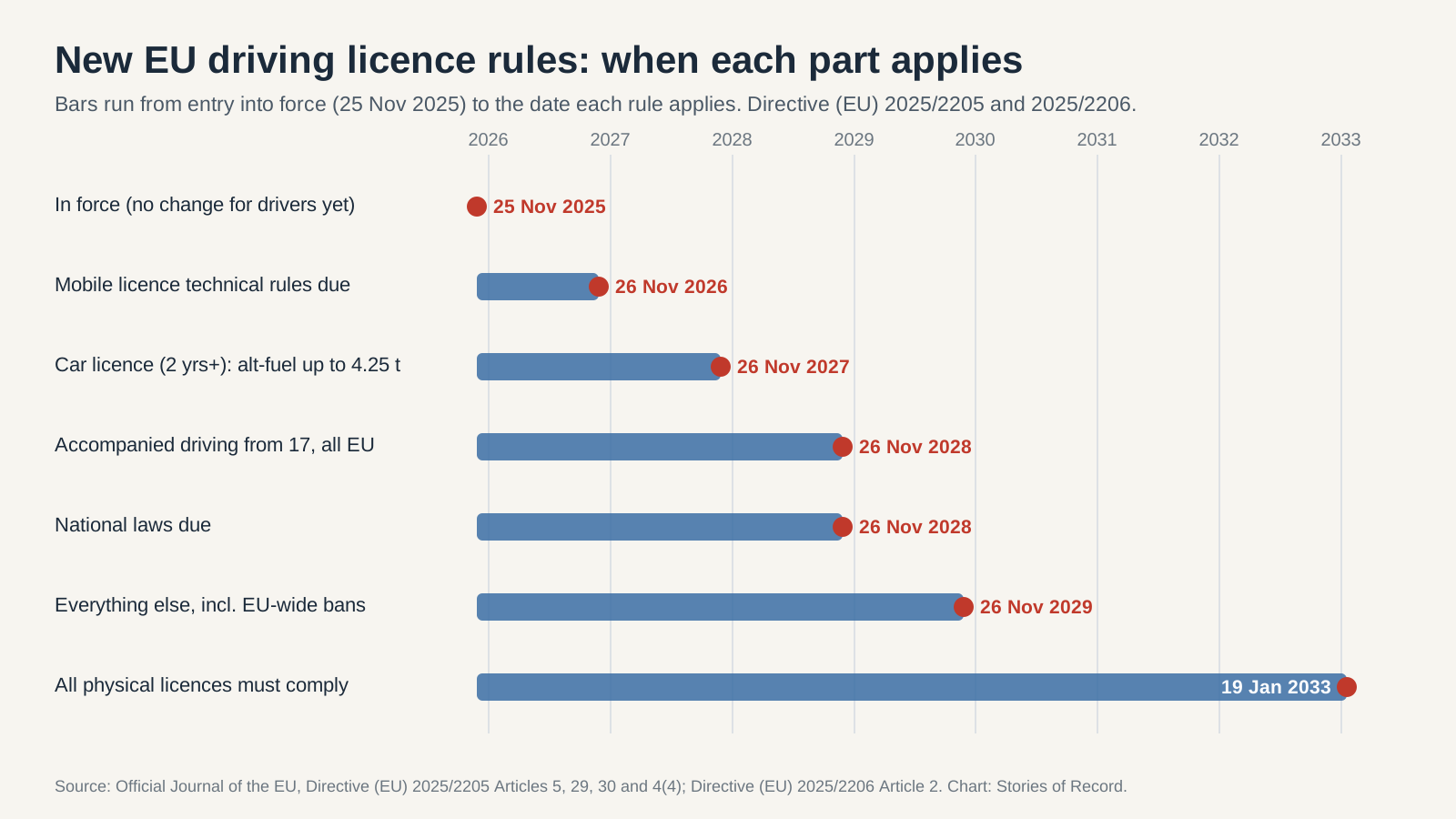
Directive (EU) 2025/2205 replaces the 2006 driving licence directive, and a second directive makes driving bans apply across the EU. Both entered into force on 25 November 2025, but drivers will meet the changes in stages. Heavier alternative-fuel vehicles on a car licence come from 26 November 2027, accompanied driving at 17 from 26 November 2028, and the rest from 26 November 2029. Every physical licence in circulation must meet the new rules by 19 January 2033.
 Illustration
The new rules entered into force on 25 November 2025. The next deadline is 26 November 2026, for the Commission's technical rules on mobile licences.
- Last changed:
Latest update
First version: every dated step of the new EU driving licence rules, from the 2023 proposal to the 2033 deadline for older licences, from the Official Journal text.
What changed in this version
Version 1, : Record created.
Key facts
- Both directives entered into force on 25 November 2025. Most of the new rules do not apply to drivers until national laws take them over. [6] [3]
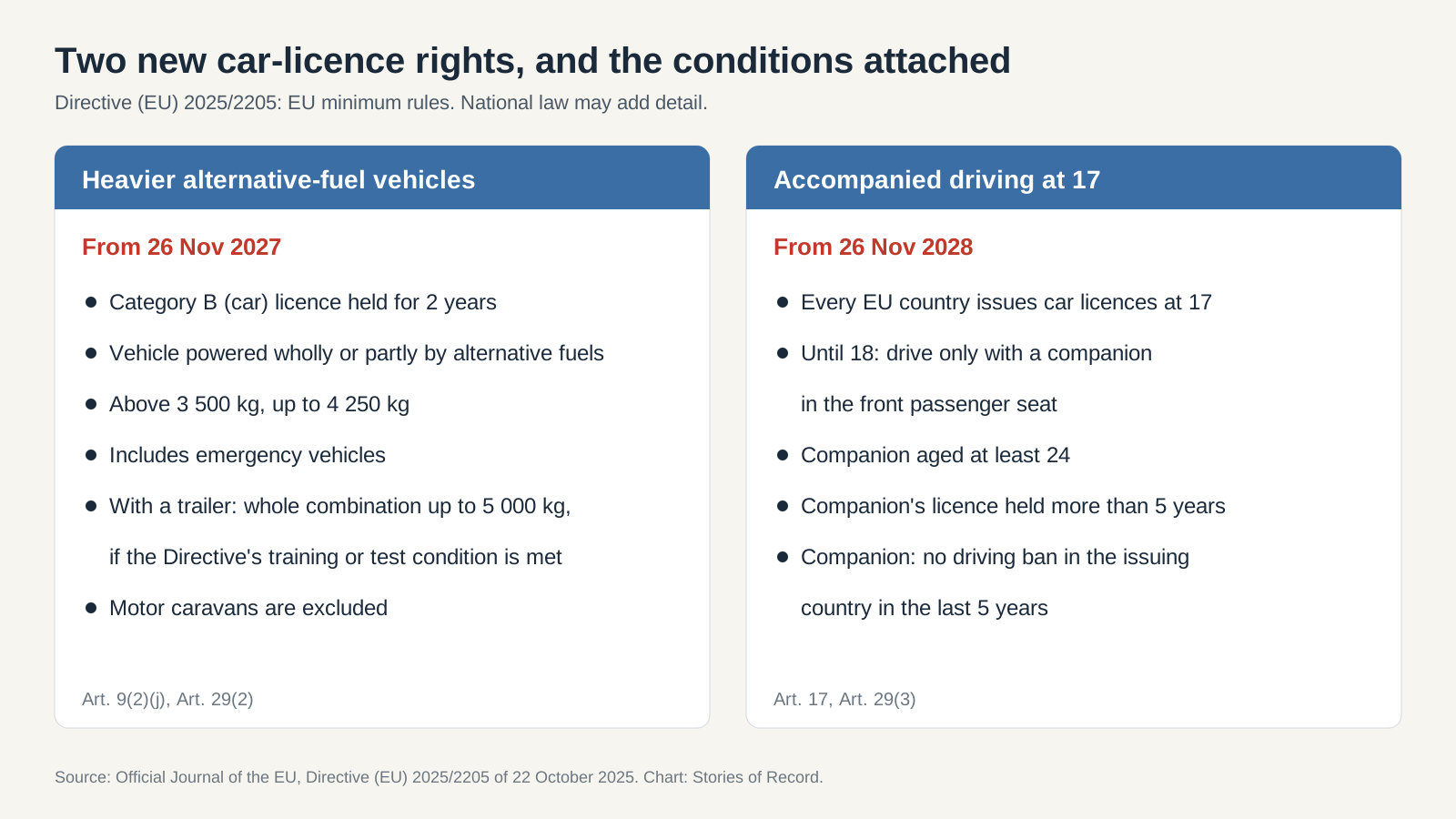
- From 26 November 2028, every EU country must issue car licences to 17-year-olds for accompanied driving. Until 18, they may drive only with a companion aged at least 24 who has held a licence for more than five years. [3]
- The rest of the rules apply from 26 November 2029, the day the 2006 driving licence directive is repealed. The EU-wide recognition of driving bans applies from the same day. [3] [5]
Record history (timeline)
- Belgium has notified a national measure for the directive: a royal decree on the driving licence needed for hydrogen or electric vans, published in the Moniteur Belge on 24 June 2026, notified to the Commission in July 2026 and applying from 26 November 2027, according to the EU Publications Office's record of national transposition measures. [8]
- The Commission published a draft of the implementing regulation on mobile driving licences on 15 June 2026. When this record was checked, the EU Publications Office still listed it as a draft that is not the Commission's final position, with no adopted act number. [11]
- Finland has notified its Driving Licence Act (386/2011) as last amended by Act 349/2026, notified on 28 May 2026, according to the same EU record. [8]
- The Council adopted its first-reading position in September 2025, and Parliament gave final approval in October 2025. [3]
- Parliament and Council negotiators reached a provisional agreement on the new rules in March 2025, which the Commission welcomed. [4]
- The European Parliament adopted its first-reading position in February 2024. [3]
- The European Commission proposed new driving licence rules in March 2023, including a digital licence valid across the EU and online replacement, renewal and exchange. [2]
- Every driving licence issued in the EU since 19 January 2013 uses the same credit-card-sized plastic format. [1]
What is confirmed
- Every driving licence issued in the EU since 19 January 2013 uses the same credit-card-sized plastic format. [1]
- The European Commission proposed new driving licence rules in March 2023, including a digital licence valid across the EU and online replacement, renewal and exchange. [2]
- The European Parliament adopted its first-reading position in February 2024. [3]
- Parliament and Council negotiators reached a provisional agreement on the new rules in March 2025, which the Commission welcomed. [4]
- The Council adopted its first-reading position in September 2025, and Parliament gave final approval in October 2025. [3]
- Directive (EU) 2025/2205 on driving licences and Directive (EU) 2025/2206 on driving disqualifications are both dated 22 October 2025 and were published in the Official Journal in November 2025. [3] [5]
- The Commission must adopt the technical rules for mobile driving licences, covering their look, security and data, by 26 November 2026. [3]
- A mobile licence in the EU Digital Identity Wallet becomes the default format 54 months after the first of those technical rules is adopted. You can still ask for a plastic card. [3] [6]
- From 26 November 2027, a car (category B) licence held for two years also covers alternatively fuelled vehicles up to 4.25 tonnes, instead of the usual 3.5 tonnes. Motor caravans are excluded from this rule. [3] [6]
- EU countries must pass their national laws for the rest of both directives by 26 November 2028. [3] [5]
- Every physical licence issued or still in circulation must meet the new rules by 19 January 2033. [3]
- New drivers will have a probationary period of at least two years, with stricter rules or penalties for drink-driving than other drivers. [3]
- A car or motorcycle licence will be valid for 15 years, or 10 years where it also serves as an identity document. Lorry and bus licences are valid for five years. Countries may shorten validity for drivers aged 65 or over. [3]
- At minimum, drivers will fill in a self-assessment of their fitness to drive when a licence is issued and at each renewal, unless their country uses another assessment system. [6]
- A driving ban imposed in one EU country for a serious offence, such as speeding 50 km/h over the limit or drink- or drug-driving, will apply across the EU. [6]
- Licences that an EU country issued in exchange for a non-EU licence carry code 70 and other EU countries do not have to recognise them. The new rules allow EU-wide recognition for exchanges from non-EU countries the Commission and EU countries approve one by one. [6]
- If the country you live in does not offer translation or interpretation in your EU language, you may take your first car licence in your country of citizenship instead. [6]
- The Commission's implementation strategy for the two directives, dated July 2026, predicts the mobile licence will become the default format around the last quarter of 2030. It says the date could come earlier under a review clause. [7]
- The companion for accompanied driving must also not have had a driving ban in the country that issued their licence within the last five years. [3]
- Where the Directive's training or test condition is met, such an alternative-fuel vehicle may tow a trailer if the whole combination stays within 5 000 kg. [3]
- A category BE licence held for two years will also cover a combination of an alternative-fuel towing vehicle above 3 500 kg and up to 4 250 kg with a light trailer (categories O1 or O2). [3]
- Under the driving disqualifications directive, a ban imposed in another EU country is passed to the country that issued the licence only if it is final with no appeal left, lasts at least three months, has more than one month left to run, and the person was identified as the driver. [5]
- Belgium has notified a national measure for the directive: a royal decree on the driving licence needed for hydrogen or electric vans, published in the Moniteur Belge on 24 June 2026, notified to the Commission in July 2026 and applying from 26 November 2027, according to the EU Publications Office's record of national transposition measures. [8]
- Finland has notified its Driving Licence Act (386/2011) as last amended by Act 349/2026, notified on 28 May 2026, according to the same EU record. [8]
- When this source was checked, the EU Publications Office's record listed no national measures for the directive from any other EU country. The record can lag behind national publication. [8]
- The Commission's implementation strategy planned the implementing act on mobile driving licences for the third quarter of 2026, the act on the EU driving licence network for the fourth quarter of 2026, and the act on QR codes in physical licences for the third quarter of 2027. [7]
- Germany already runs its own accompanied-driving scheme: a B or BE licence issued under it carries the condition that the holder may drive only with at least one named companion, and the condition ends when the holder reaches the normal minimum age. [9]
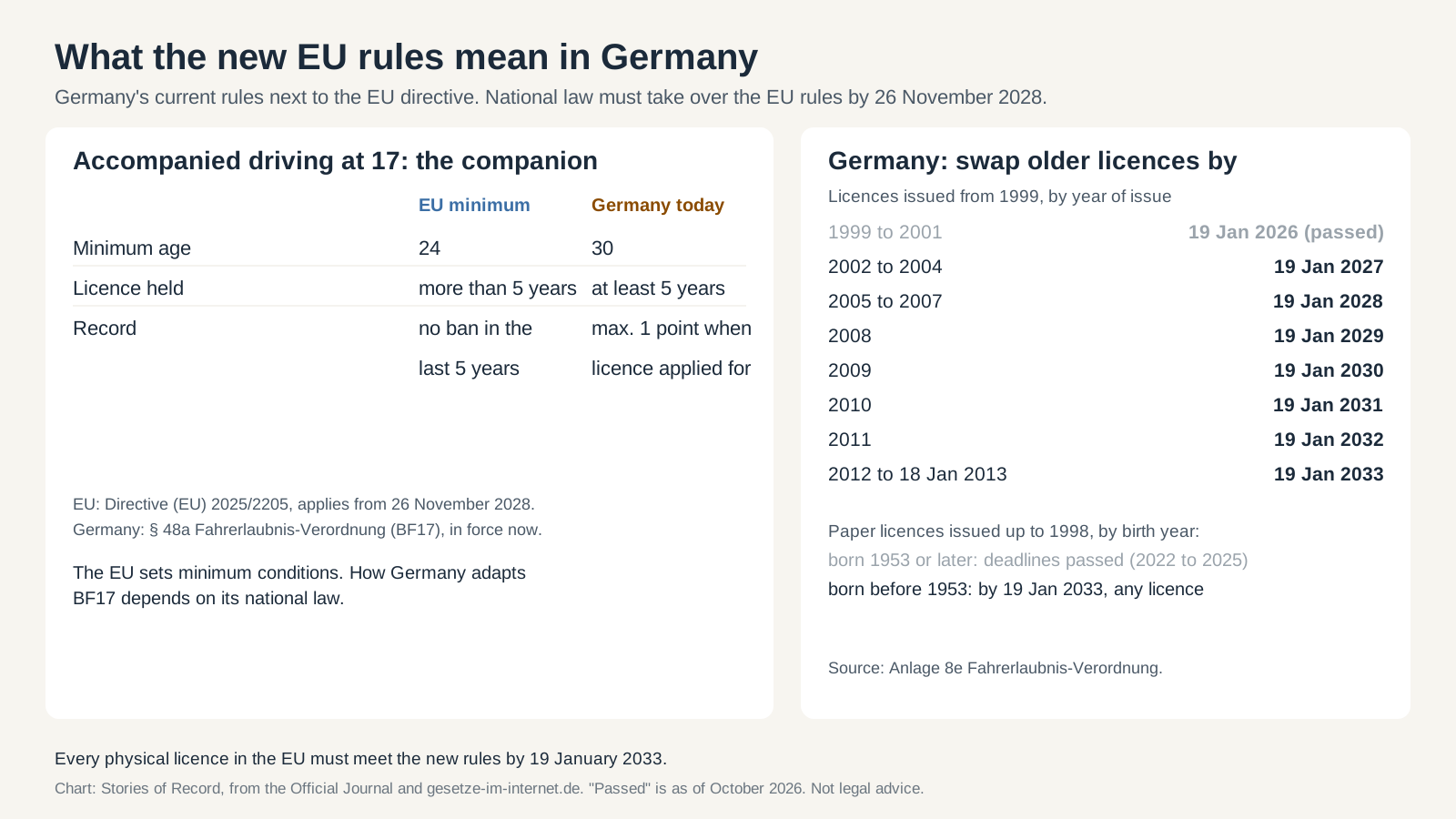
- Germany's accompanied-driving rules for the companion are stricter than the EU minimum: the companion must be at least 30, must have held a car licence for at least five years, and may have no more than one point in the driving aptitude register when the licence is applied for. [9]
- Under the German rules the companion also may not accompany with 0,5 per mille or more alcohol in the blood, 3,5 ng/ml or more THC in blood serum, or under the effect of listed drugs. [9]
- In Germany, licences issued before 19 January 2013 must be exchanged on a fixed timetable. For licences issued up to the end of 1998 it depends on the holder's birth year: born 1953 to 1958 by 19 July 2022, 1959 to 1964 by 19 January 2023, 1965 to 1970 by 19 January 2024, 1971 or later by 19 January 2025, and before 1953 by 19 January 2033. [10]
- For German licences issued from 1999 it depends on the year of issue: 1999 to 2001 by 19 January 2026, 2002 to 2004 by 19 January 2027, 2005 to 2007 by 19 January 2028, then one year at a time up to 2012 and early 2013 by 19 January 2033. Holders born before 1953 have until 19 January 2033 whatever the year of issue. [10]
- The Commission published a draft of the implementing regulation on mobile driving licences on 15 June 2026. When this record was checked, the EU Publications Office still listed it as a draft that is not the Commission's final position, with no adopted act number. [11]
What remains unconfirmed
No open questions are being tracked.
Why it matters
Anyone learning to drive, renewing a licence, moving between EU countries or swapping a non-EU licence is affected. The headlines say the rules are in force, but most changes do not reach drivers until 2027 to 2029. The 2006 directive stays in force until 26 November 2029.
Questions
Can I use a digital driving licence on my phone now?
Not yet in a form valid across the EU. The Commission must adopt the technical rules for mobile licences by 26 November 2026; it published a draft on 15 June 2026, which was still a draft when this record was checked. The mobile licence becomes the default format 54 months after the first of those rules is adopted, which the Commission currently expects around the last quarter of 2030. You can still ask for a plastic card.
When can 17-year-olds drive in every EU country?
From 26 November 2028, every EU country must issue car licences at 17 for accompanied driving. Until 18, the driver needs a companion aged at least 24 who has held a licence for more than five years.
Will Germany's accompanied driving at 17 (BF17) change?
Germany already lets 17-year-olds drive with a named companion. Its rules are stricter than the EU minimum: the companion must be at least 30, not 24, and may have no more than one point in the register. The EU rules set minimum conditions; how Germany adapts its scheme depends on its national law, due by 26 November 2028.
Do I need to replace my current licence?
All physical licences issued or in circulation must meet the new rules by 19 January 2033. Germany already has its own exchange timetable for licences issued before 19 January 2013: card licences issued from 2002 to 2004 must be exchanged by 19 January 2027, and the last ones by 19 January 2033.
How long will a new car licence be valid?
15 years, or 10 years where it also serves as an identity document. Countries may shorten that for drivers aged 65 or over.
Will a driving ban from another EU country apply at home?
From 26 November 2029, a ban for a serious offence, such as speeding 50 km/h over the limit or drink- or drug-driving, will apply across the EU. It is passed on only if it is final with no appeal left, lasts at least three months, has more than one month left to run, and you were identified as the driver.
Can I drive a heavier electric van on a car licence?
From 26 November 2027, a category B licence held for two years covers alternatively fuelled vehicles up to 4.25 tonnes, not 3.5 tonnes. Motor caravans are not included in that rule.
Which EU countries have notified national measures so far?
The EU Publications Office's record lists national measures only from Belgium and Finland so far (checked 10 October 2026). Belgium's royal decree covers the licence for hydrogen or electric vans and applies from 26 November 2027; Finland notified its Driving Licence Act as amended. The country tracker on this page shows each country's status and when it was last checked.
Sources
- European Commission (incl. Travel to Europe: ETIAS and EES) Official (government)Retrieved: 8 October 2026
- European Commission (incl. Travel to Europe: ETIAS and EES) Official (government)Retrieved: 8 October 2026
- Publications Office of the European Union Original documentRetrieved: 8 October 2026
- European Commission (incl. Travel to Europe: ETIAS and EES) Official (government)Retrieved: 8 October 2026
- Publications Office of the European Union Original documentRetrieved: 8 October 2026
- European Commission (incl. Travel to Europe: ETIAS and EES) Official (government)Retrieved: 8 October 2026
- European Commission (incl. Travel to Europe: ETIAS and EES) Official (government)Retrieved: 9 October 2026
- Publications Office of the European Union Original documentRetrieved: 10 October 2026
- Gesetze im Internet (Federal Ministry of Justice) Original documentRetrieved: 10 October 2026
- Gesetze im Internet (Federal Ministry of Justice) Original documentRetrieved: 10 October 2026
- Publications Office of the European Union Original documentRetrieved: 10 October 2026
People, places and organizations
- organization
- European Commission
- topic
- Directive (EU) 2025/2205 on driving licences