
Travel and borders · Entry/Exit System · Schengen area · Border checks · Travel to Europe
EU Entry/Exit System (EES): every date from the 2016 proposal to full operation in April 2026
The Entry/Exit System has been fully operational since 10 April 2026 and has replaced passport stamping at the Schengen external border.
Last changed (version 1) · Last verified · Every earlier version
 Illustration
The EU's Entry/Exit System (EES) registers non-EU visitors on short stays with their passport details, fingerprints and a facial image each time they cross the external border of the 29 countries using it. It replaced passport stamping and has been fully operational since 10 April 2026, after a phased start that began on 12 October 2025. The law behind it dates from 2017; the phased start needed a second law in July 2025.
Latest update
First version: every official EES date from the 2016 proposal to full operation on 10 April 2026, with the current rules for travellers.
What changed in this version
Version 1, : Record created.
Key facts
- It stores the traveller's name, passport details, fingerprints, a facial image, and the date and place of each entry and exit. It also logs refusals of entry. [1]
- The system has been fully operational since 10 April 2026 and has replaced passport stamping, so overstayers are now detected automatically. [1]
- The phased start was set to begin on 12 October 2025, about six months before full operation. [1]
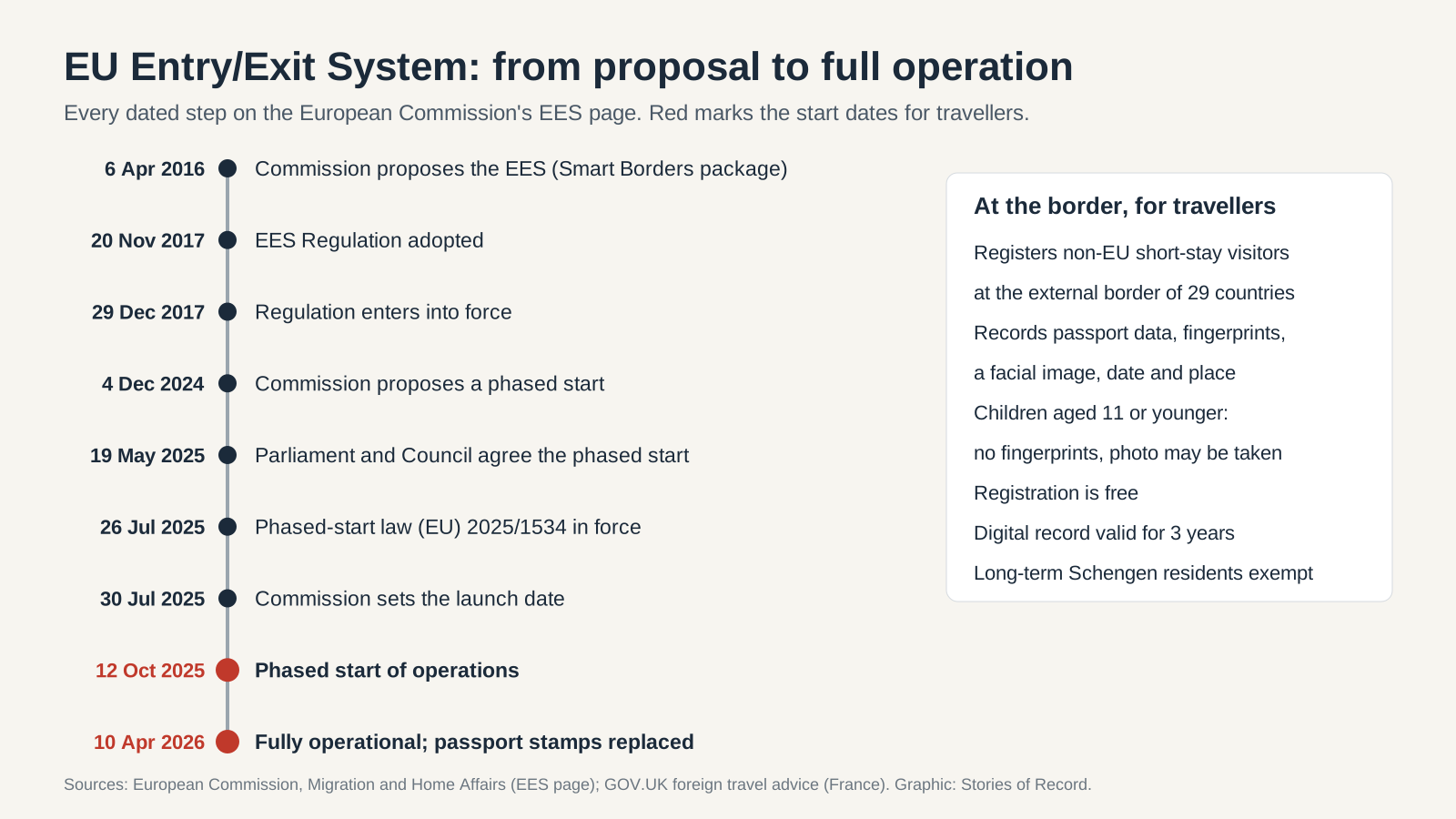
Timeline
- The system has been fully operational since 10 April 2026 and has replaced passport stamping, so overstayers are now detected automatically. [1]
- The phased start was set to begin on 12 October 2025, about six months before full operation. [1]
- On 30 July 2025 the Commission fixed 12 October 2025 as the date the phased start would begin. [1]
- The phased-start law, Regulation (EU) 2025/1534, was adopted on 18 July 2025 and took effect on 26 July 2025. [1]
- Parliament and the Council agreed the phased start on 19 May 2025. [1]
- On 4 December 2024 the Commission proposed starting the system gradually rather than all at once. [1]
- The regulation entered into force on 29 December 2017, years before the system itself started. [1]
- The EES Regulation was adopted on 20 November 2017, together with a targeted change to the Schengen Borders Code. [1]
- The European Commission first proposed the system on 6 April 2016, in a revised package of border measures known as Smart Borders. [1]
What is confirmed
- The Entry/Exit System electronically logs non-EU visitors on short stays every time they cross the external border of one of the 29 European countries that use it. [1]
- The European Commission first proposed the system on 6 April 2016, in a revised package of border measures known as Smart Borders. [1]
- The EES Regulation was adopted on 20 November 2017, together with a targeted change to the Schengen Borders Code. [1]
- The regulation entered into force on 29 December 2017, years before the system itself started. [1]
- On 4 December 2024 the Commission proposed starting the system gradually rather than all at once. [1]
- Parliament and the Council agreed the phased start on 19 May 2025. [1]
- The phased-start law, Regulation (EU) 2025/1534, was adopted on 18 July 2025 and took effect on 26 July 2025. [1]
- On 30 July 2025 the Commission fixed 12 October 2025 as the date the phased start would begin. [1]
- The EU agency eu-LISA built the system and runs it. [1]
- Registering in the EES costs nothing, according to the UK Foreign Office. [2]
- Children aged 11 or younger do not give fingerprints, but may have their photo taken. [2]
- A traveller's EES record stays valid for 3 years, so later crossings can be quicker. [2]
- Travellers may be asked for fingerprints or a photo when leaving the Schengen area too, and the UK advises allowing extra time at departure. [2]
- Long-term residents of a Schengen country are exempt from the EES in every Schengen country. [2]
- ETIAS is a different scheme: a travel authorisation that visa-exempt visitors will need before travelling to Europe, separate from the border registration the EES carries out. [3]
What remains unconfirmed
No open questions are being tracked.
Why it matters
Non-EU visitors, including UK travellers, now give fingerprints and a facial image at their first crossing, and overstays are detected automatically instead of from passport stamps. Registration is free, but the checks can add time at the border on the way in and out.
What happens next
No upcoming events are known.
Questions
When did the EES start?
A phased start began on 12 October 2025, and the system became fully operational on 10 April 2026, when it replaced passport stamping.
Does the EES cost anything?
No. The UK Foreign Office says there is no cost for EES registration.
What does the EES collect?
Name, travel document data, fingerprints, a facial image, and the date and place of every entry and exit. It also records refusals of entry.
Do children give fingerprints?
Children aged 11 or younger are not fingerprinted but can be asked for a photo.
How long is an EES record kept valid?
The UK Foreign Office says a traveller's digital EES record is valid for 3 years.
Is the EES the same as ETIAS?
No. The EES registers you at the border. ETIAS is a separate travel authorisation that visa-exempt visitors will need to get before travelling to Europe.
Sources
- Entry-Exit System, European Commission (incl. Travel to Europe: ETIAS and EES)Official (government)Accessed 7 October 2026.
- Entry requirements - France travel advice, GOV.UKOfficial (government)Accessed 7 October 2026.
- European Travel Information Authorisation System, European Commission (incl. Travel to Europe: ETIAS and EES)Official (government)Accessed 7 October 2026.
People, places and organizations
- organization
- European Commission
- organization
- eu-LISA