Schengen visa fee: €90 since June 2024, who pays less, and how the next rise is decided
A Schengen short-stay visa costs €90 for adults and €45 for children from six until their 12th birthday, and nothing for younger children. The fee rose from €80 in June 2024, after the Commission's three-yearly review of inflation and civil-servant pay. Some nationalities pay less, students and researchers are exempt, and visa centres may add a capped service fee.
 Illustration
The fee has been €90 for adults and €45 for children since June 2024. The law requires the Commission to reassess it every three years.
- Last changed:
Latest update
This record sets out the current €90 fee with every change since 2010 and the rules that decide the next one.
What changed in this version
Version 1, : Story created.
Key facts
- A Schengen short-stay visa costs €90 for adults and €45 for children from age six until their 12th birthday. Children under six pay nothing. [1] [2]
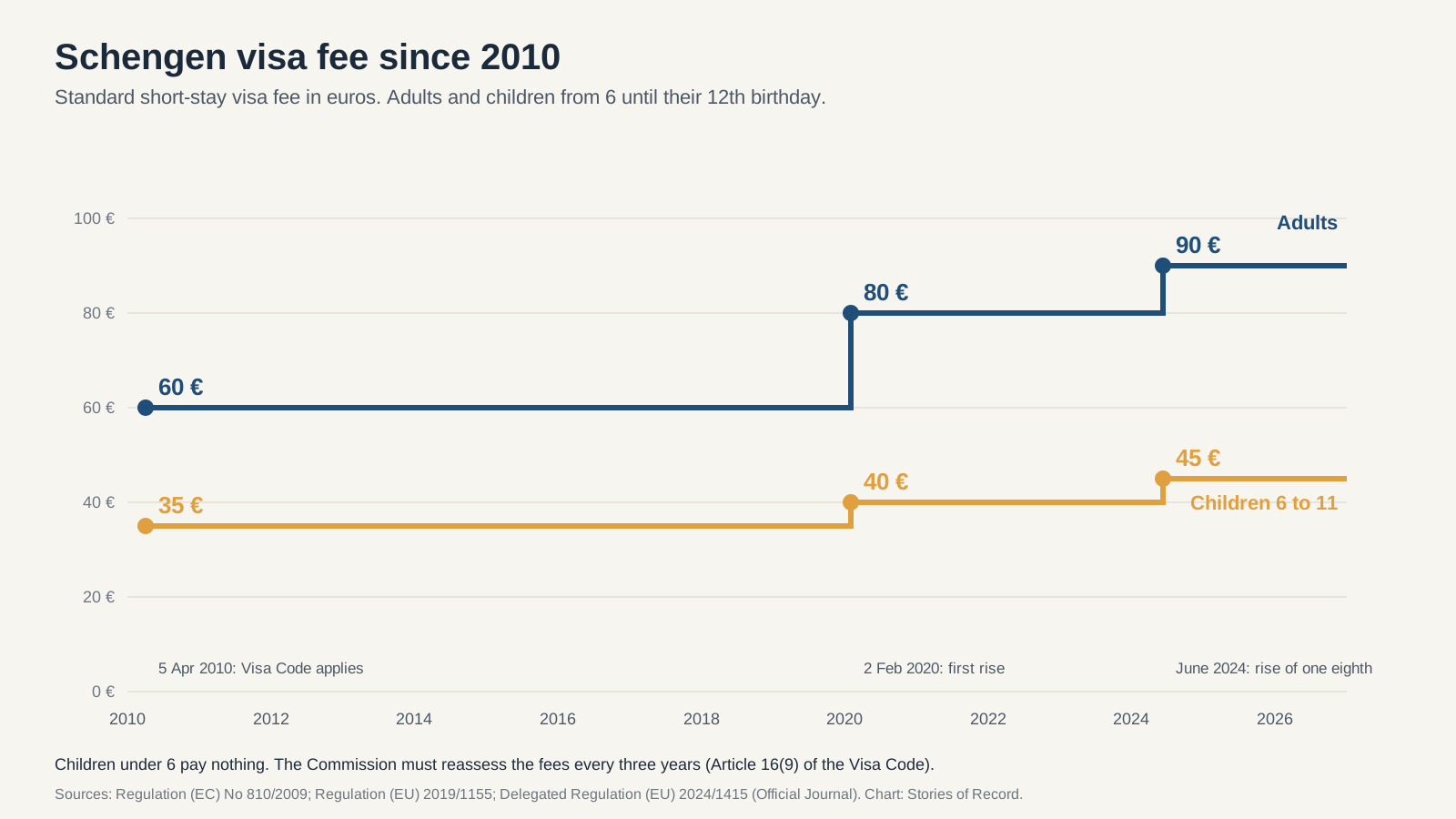
- The fee rose from €80 to €90, and from €40 to €45 for children, under a Commission regulation adopted in March 2024 and published in the Official Journal in May 2024. It took effect on the twentieth day after publication, in June 2024. [1] [3]
- The law requires the Commission to assess every three years whether the fees should change, using EU inflation and civil-servant pay, and to change them by delegated act where appropriate. [3]
Record history (timeline)
- The Visa Code first set the fee at €60 for adults and €35 for children from six until their 12th birthday when it began to apply on 5 April 2010. [2]
What is confirmed
- The Commission raised the fees by one eighth after comparing EU-wide inflation and the weighted average pay of national civil servants between July 2020 and July 2023. [1]
- The fee had risen from €60 to €80, and from €35 to €40 for children, on 2 February 2020. [2] [3]
- The Visa Code first set the fee at €60 for adults and €35 for children from six until their 12th birthday when it began to apply on 5 April 2010. [2]
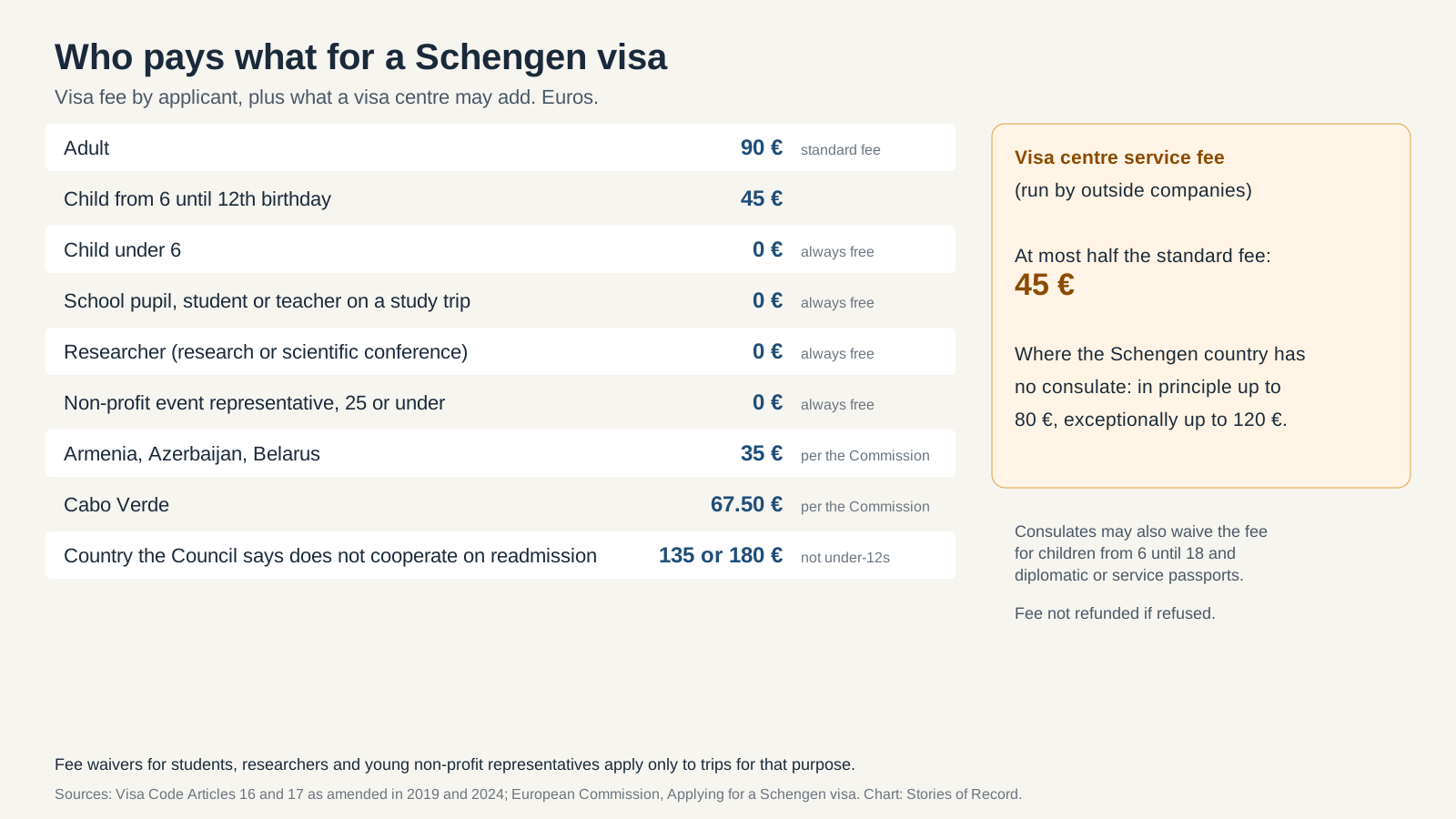
- A fee of €135 or €180 applies to nationals of a country if the Council decides it is not cooperating enough on readmission. It never applies to children under 12. [1]
- Some nationalities pay less under EU agreements: €35 for applicants from Armenia, Azerbaijan and Belarus, and €67.50 for applicants from Cabo Verde, according to the Commission. [4]
- The fee is waived for school pupils, students and accompanying teachers on study trips, for researchers travelling for research or a scientific conference, and for representatives of non-profit groups aged 25 or under at their events. The fee may also be waived, at the Schengen country's discretion, for children from six until their 18th birthday and holders of diplomatic or service passports. In individual cases it may also be waived or reduced for humanitarian reasons, international obligations, or cultural, sporting, foreign-policy, development-policy or other vital public interests. [2] [3]
- Visa centres run by outside companies may add a service fee. It may not exceed half the standard visa fee, and that cap stays the same even for applicants who pay a reduced fee or none. In countries where the Schengen state has no consulate, it should in principle stay at or below €80, and up to €120 in exceptional cases. [2] [3]
- The fee is not refunded if the visa is refused; it is returned only in narrow cases, such as when the consulate is not competent or the application is inadmissible. [2]
- Apply at least 15 days and no more than six months before the trip. A decision normally takes 15 days and can take up to 45. [4]
- Since November 2021 the EU has suspended part of its visa facilitation agreement with Belarus for officials: members of Belarus's national or regional government or parliament, its Constitutional and Supreme Courts, and Belarusian official delegations no longer get the agreement's fee waiver. Other Belarusian applicants still pay the €35 agreement fee, according to the Commission. [6] [7] [4]
- Russian citizens get no reduced fee: the EU suspended its visa facilitation agreement with Russia in whole from 12 September 2022, so they pay the standard fee. [8]
- Non-EU family members of an EU citizen who moves to or lives in another EU country get their visa free of charge and through an accelerated procedure, under the EU free movement directive. [9]
- The higher fee has been used before. From December 2022 nationals of The Gambia had to pay a visa fee of €120, until the Council repealed the measure in April 2024 after cooperation on return flights improved. [10] [11]
- Nationals of three countries currently face restrictive visa measures for poor cooperation on readmission: The Gambia, under a Council decision of 7 October 2021 that stayed in force when its higher fee was repealed in April 2024; Somalia, under a decision of 25 June 2026; and Guinea, under one of 10 July 2026. For them the standard processing period becomes 45 days instead of 15, multiple-entry visas under the usual rules are suspended, and diplomatic and service passport holders lose the optional fee waiver. None of these decisions sets a higher fee, and they do not apply to family members of EU citizens covered by the free movement directive. Similar measures for Ethiopia, adopted in 2024, were lifted by a Council decision of 18 May 2026. [12] [11] [13] [14] [15]
What remains unconfirmed
- The Commission plans to propose a new Visa Code (a recast) in the first quarter of 2027. Its call for evidence says it will explore with Member States whether to add a harmonised extra charge at EU level on top of the Schengen visa fee, and that it wants to make the readmission mechanism, which can trigger the higher fee, more flexible. No extra charge has been decided and no amount has been given. [5]
Why it matters
Millions of travellers need a Schengen visa for short trips to Europe. Knowing the exact fee, who is exempt, and what a visa centre may add on top helps applicants avoid overpaying, and the review rule shows when the next change can come.
Questions
How much is a Schengen visa now?
€90 for adults and €45 for children from six until their 12th birthday. Children under six pay nothing.
When did the Schengen visa fee go up?
It rose from €80 to €90 in June 2024. Before that it rose from €60 to €80 on 2 February 2020.
Why did it go up?
The Commission compared EU-wide inflation and the average pay of national civil servants between July 2020 and July 2023 and raised the fees by one eighth.
When will the fee change again?
The law requires the Commission to assess the fees every three years using EU-wide inflation and civil-servant pay. The last assessment covered July 2020 to July 2023 and led to the June 2024 rise, and no newer fee assessment had been proposed when this record was checked. Separately, the Commission plans to propose a new Visa Code in the first quarter of 2027 and will explore an extra EU-level charge on top of the visa fee. Nothing has been decided and no amount has been given.
Who pays less or nothing?
Children under six pay nothing. Students and pupils on study trips, researchers and young representatives of non-profit groups at their events are exempt. Applicants from Armenia, Azerbaijan and Belarus pay €35, and from Cabo Verde €67.50.
Do Russian citizens pay a reduced fee?
No. The EU suspended its visa facilitation agreement with Russia in whole from 12 September 2022, so Russian citizens pay the standard €90.
Do family members of EU citizens pay?
Not if the EU free movement directive covers them: non-EU family members who travel with or join an EU citizen living in another EU country get the visa free and through an accelerated procedure.
How much can a visa centre charge on top?
The service fee may not exceed half the standard visa fee, so at most €45, and that cap is the same even for applicants who pay a reduced fee or none. An adult using a visa centre therefore pays at most €90 plus €45. Where the Schengen country has no consulate, the cap is in principle €80, and up to €120 in exceptional cases.
Do I get the fee back if my visa is refused?
No. The fee is refunded only in narrow cases, such as when the consulate was not competent or the application was inadmissible.
Can the fee be higher for some nationalities?
Yes. A fee of €135 or €180 applies if the Council decides a country is not cooperating enough on readmission. It never applies to children under 12. The Gambia paid a higher fee from December 2022 until the Council repealed it in April 2024. When this record was checked we found no higher-fee decision in force in the Official Journal. Nationals of The Gambia, Somalia and Guinea still face other restrictions, such as a 45-day standard processing period and no fee waiver for diplomatic and service passports, but not a higher fee.
When should I apply?
At least 15 days and no more than six months before your trip. A decision normally takes 15 days and can take up to 45.
Sources
- Publications Office of the European Union Original documentRetrieved: 10 October 2026
- Publications Office of the European Union Original documentRetrieved: 10 October 2026
- Publications Office of the European Union Original documentRetrieved: 10 October 2026
- European Commission (incl. Travel to Europe: ETIAS and EES) Official (government)Retrieved: 10 October 2026
- European Commission (incl. Travel to Europe: ETIAS and EES) Official (government)Retrieved: 10 October 2026
- Publications Office of the European Union Original documentRetrieved: 10 October 2026
- Publications Office of the European Union Original documentRetrieved: 10 October 2026
- Publications Office of the European Union Original documentRetrieved: 10 October 2026
- Publications Office of the European Union Original documentRetrieved: 10 October 2026
- Publications Office of the European Union Original documentRetrieved: 10 October 2026
- Publications Office of the European Union Original documentRetrieved: 10 October 2026
- Publications Office of the European Union Original documentRetrieved: 10 October 2026
- Publications Office of the European Union Original documentRetrieved: 10 October 2026
- Publications Office of the European Union Original documentRetrieved: 10 October 2026
- Publications Office of the European Union Original documentRetrieved: 10 October 2026
People, places and organizations
- organization
- European Commission
- topic
- EU Visa Code (Regulation (EC) No 810/2009)