
Health · Obesity · Child health · World Health Organization · Weight-loss medicines · GLP-1 medicines
WHO's first global guidelines on child and adolescent obesity: lifestyle care first, no medicines under 10
 Illustration
WHO has published its first guidelines on managing obesity in children and adolescents.
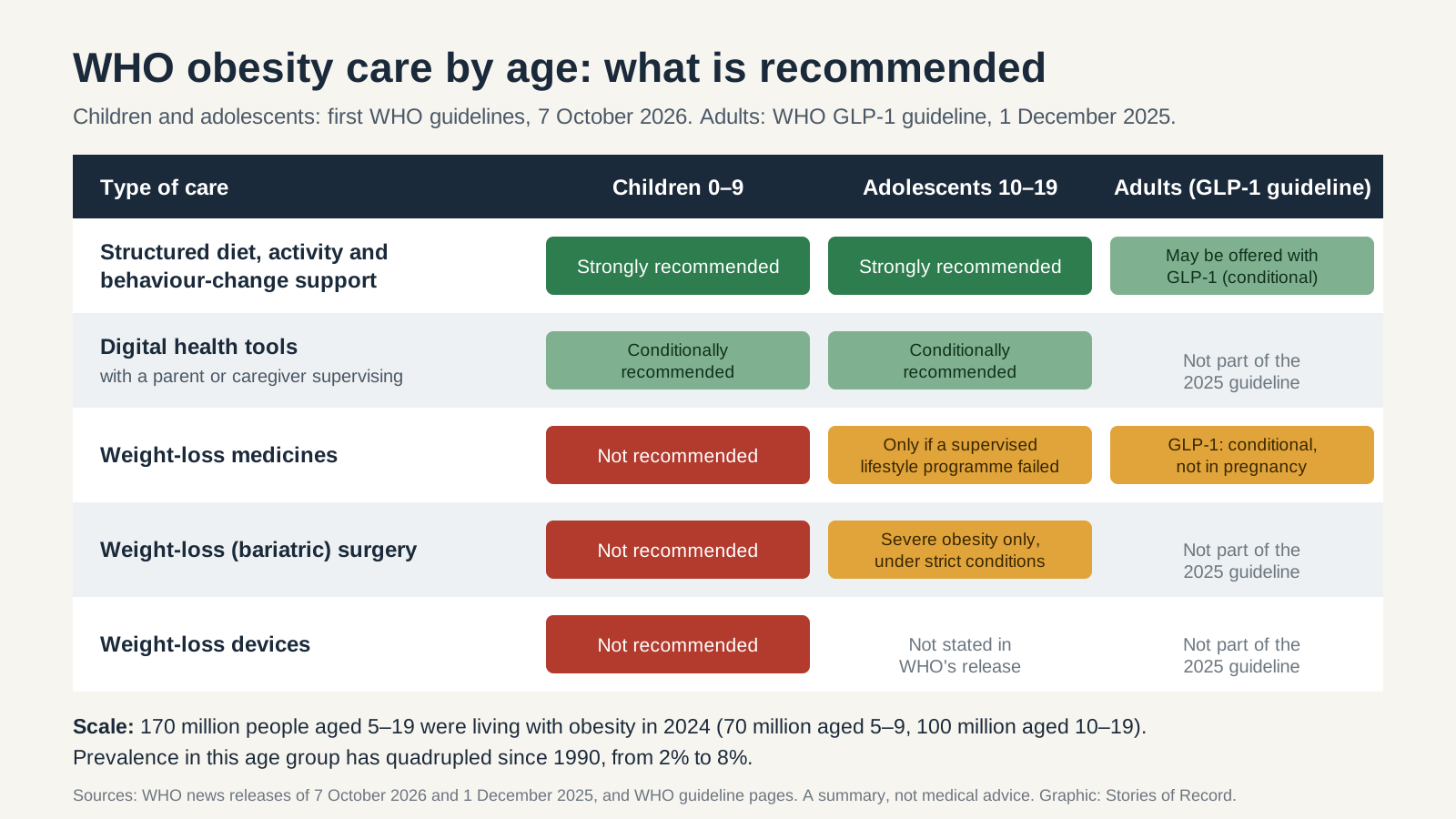
On Wednesday the World Health Organization published its first global guidelines on managing obesity in children and adolescents. They strongly recommend structured diet, physical activity and behaviour-change support. They do not recommend medicines, weight-loss surgery or weight-loss devices for children under 10. Adolescents aged 10 to 19 may be considered for approved medicines only if a supervised lifestyle programme has not worked, and for surgery only under strict conditions for severe obesity.
Latest update
WHO published its first global guidelines on managing obesity in children and adolescents.
What changed in this version
Version 1, : Story created.
Key facts
- The World Health Organization released its first guidelines on obesity in children and adolescents, setting out how health systems and health workers should deliver care. [1]
- WHO does not recommend medicines, weight-loss surgery or weight-loss devices for children aged 0 to 9. [1]
- Adolescents aged 10 to 19 may be considered for approved weight-loss medicines, but only after a supervised lifestyle programme combining several approaches has failed to work. Surgery may be considered for adolescents with severe obesity, under strict conditions. [1]
Timeline
- The World Health Organization released its first guidelines on obesity in children and adolescents, setting out how health systems and health workers should deliver care. [1]
- On 1 December 2025 WHO issued its first guideline on GLP-1 medicines for obesity, conditionally recommending them for long-term treatment in adults, excluding pregnant women. [4]
- WHO put GLP-1 medicines on its Essential Medicines List on 5 September 2025, for treating type 2 diabetes in people at high risk. [4]
What is confirmed
- There are two documents: one for children aged 29 days to under 10 years, and one for adolescents aged 10 to 19. [2] [3]
- In 2024, 170 million children and adolescents aged 5 to 19 were living with obesity: 70 million aged 5 to 9 and 100 million aged 10 to 19. [1]
- Obesity prevalence among 5- to 19-year-olds has quadrupled since 1990, from 2% to 8%. [1]
- For children and adolescents with obesity, WHO strongly recommends structured diet, physical activity and behaviour-change support, given one-to-one or as part of a programme combining several approaches. Digital health tools are conditionally recommended, with a parent or caregiver supervising. [1]
- Dr Luz María De Regil, who directs WHO's Department of Nutrition and Food Safety, said: "The foundation of obesity care for children and adolescents is not medicine or surgery, but access to comprehensive support that enables healthy eating, physical activity and sustainable behaviour change." [1]
- The guidelines tell health workers to address obesity and mental health conditions such as anxiety and depression early and together. [1]
- WHO says obesity care should aim to improve health, functioning and well-being rather than only weight, with long-term follow-up. [1]
- WHO says treatment on its own will not reverse rising obesity. It wants governments to make healthy food and exercise cheaper and easier to reach, including through regulatory and fiscal measures. [1]
- Together with WHO's existing recommendations for adults, the new guidelines give WHO obesity-care recommendations from childhood to adulthood. [1]
- WHO says the consequences of obesity can begin early in life, raising the risk of type 2 diabetes and cardiovascular disease, and that children and adolescents with obesity may face stigma, discrimination and bullying. [1]
- WHO put GLP-1 medicines on its Essential Medicines List on 5 September 2025, for treating type 2 diabetes in people at high risk. [4]
- On 1 December 2025 WHO issued its first guideline on GLP-1 medicines for obesity, conditionally recommending them for long-term treatment in adults, excluding pregnant women. [4]
- WHO made the adult recommendation conditional because data on long-term efficacy and safety are limited, and because of cost, health-system readiness and fair access. [4]
What remains unconfirmed
No open questions are being tracked.
Why it matters
WHO says obesity's harms can start early in life, raising the risk of type 2 diabetes and heart disease, and that children with obesity can face stigma and bullying. These are WHO's first guidelines for this age group and, with its existing adult recommendations, give WHO advice on obesity care from childhood to adulthood.
What happens next
No upcoming events are known.
Questions
Does WHO recommend weight-loss drugs for children?
Not for children under 10. For adolescents aged 10 to 19, approved medicines may be considered only after a supervised lifestyle programme has not worked.
What does WHO recommend first?
Structured support with diet, physical activity and behaviour change, given one-to-one or as a combined programme. Digital tools are conditionally recommended with a parent or caregiver supervising.
Can teenagers have weight-loss surgery under the guidelines?
Only under strict conditions, for adolescents with severe obesity. WHO does not recommend it for children under 10.
How many children and teenagers have obesity?
WHO says 170 million people aged 5 to 19 were living with obesity in 2024, and prevalence in that age group has quadrupled since 1990.
How does this compare with WHO's advice for adults?
In December 2025 WHO conditionally recommended GLP-1 medicines for long-term obesity treatment in adults, except in pregnancy. For children under 10 it now recommends no medicines at all, and for adolescents only after a supervised lifestyle programme has not worked.
Why is childhood obesity treated as a health problem, not just weight?
WHO says its harms can start early, raising the risk of type 2 diabetes and cardiovascular disease, and children with obesity may face stigma and bullying.
Sources
- WHO issues first global guidelines on child and adolescent obesity, World Health OrganizationOfficial (government)Accessed 7 October 2026.
- WHO guidelines on the integrated management of obesity in children, World Health OrganizationOfficial (government)Accessed 7 October 2026.
- WHO guidelines on the integrated management of obesity in adolescents, World Health OrganizationOfficial (government)Accessed 7 October 2026.
- WHO issues global guideline on the use of GLP-1 medicines in treating obesity, World Health OrganizationOfficial (government)Accessed 7 October 2026.
People, places and organizations
- organization
- World Health Organization