Air traffic controllers now need a tower supervisor who is doing nothing else before they can tell a departing plane to line up and wait. The Federal Aviation Administration (FAA) rule took effect on November 24, just as the Thanksgiving travel rush began.
In that procedure, a controller moves a jet onto the runway, where it holds until it is cleared to take off.
That requirement sits alongside the FAA's order for control towers, which sets other rules for the procedure. The local controller, who handles the runway, cannot also hold the supervisor's post, and that position cannot be merged with clearance delivery, flight data or ground control either.
Supervisors are told to stay aware of the whole operation and to cut out distractions.
Night brings tighter rules. Between sunset and sunrise, a plane may hold at a runway intersection only if the runway serves departures alone and one plane waits at a time.
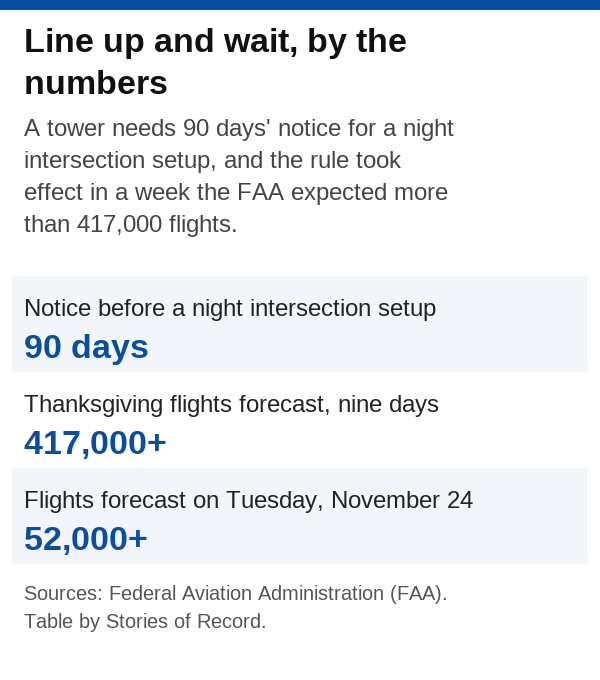
A tower that wants that night setup must file its plan at least 90 days ahead, and each region's air traffic director must make sure the procedure gets a yearly review.
The rule landed in a heavy week. On the day it took effect, the FAA forecast more than 417,000 flights across the nine-day Thanksgiving period and named that Tuesday as the peak, at more than 52,000 flights.
“Our air traffic controllers and safety professionals are working around the clock to keep Americans moving during what is expected to be the busiest Thanksgiving travel week in 16 years,”
For anyone flying home this weekend, the agency's advice is simple: leave extra time and check with your airline for flight updates.
Story history
Timeline
- FAA Administrator Bryan Bedford said controllers and safety staff were working around the clock in what the agency expects to be its busiest Thanksgiving week in 16 years.
- The agency named Tuesday, November 24, as the peak day of the holiday, at more than 52,000 flights.
- Since November 24, an FAA rule lets controllers use “line up and wait” only when a tower supervisor has no other duties.
- On November 24 the FAA forecast more than 417,000 flights across the nine-day Thanksgiving period.
Updates
- First published.
Every version of this story, as first published.
Sources (4)
- Federal Aviation Administration (FAA) Official (government)Published: October 9, 2026
- The Washington Post News organizationPublished: November 24, 2026
- Federal Aviation Administration (FAA) Official (government)Retrieved: November 26, 2026
- Federal Aviation Administration (FAA) Official (government)Retrieved: November 26, 2026
About the picture: this is a stock photo from Storyblocks. It does not show the people, places or events in this story.
Follow us on Facebook
We post new stories on our Facebook Page.
Follow on Facebook