Working while studying in Germany: the 140-day limit, how a week counts, and the official page that still says 120
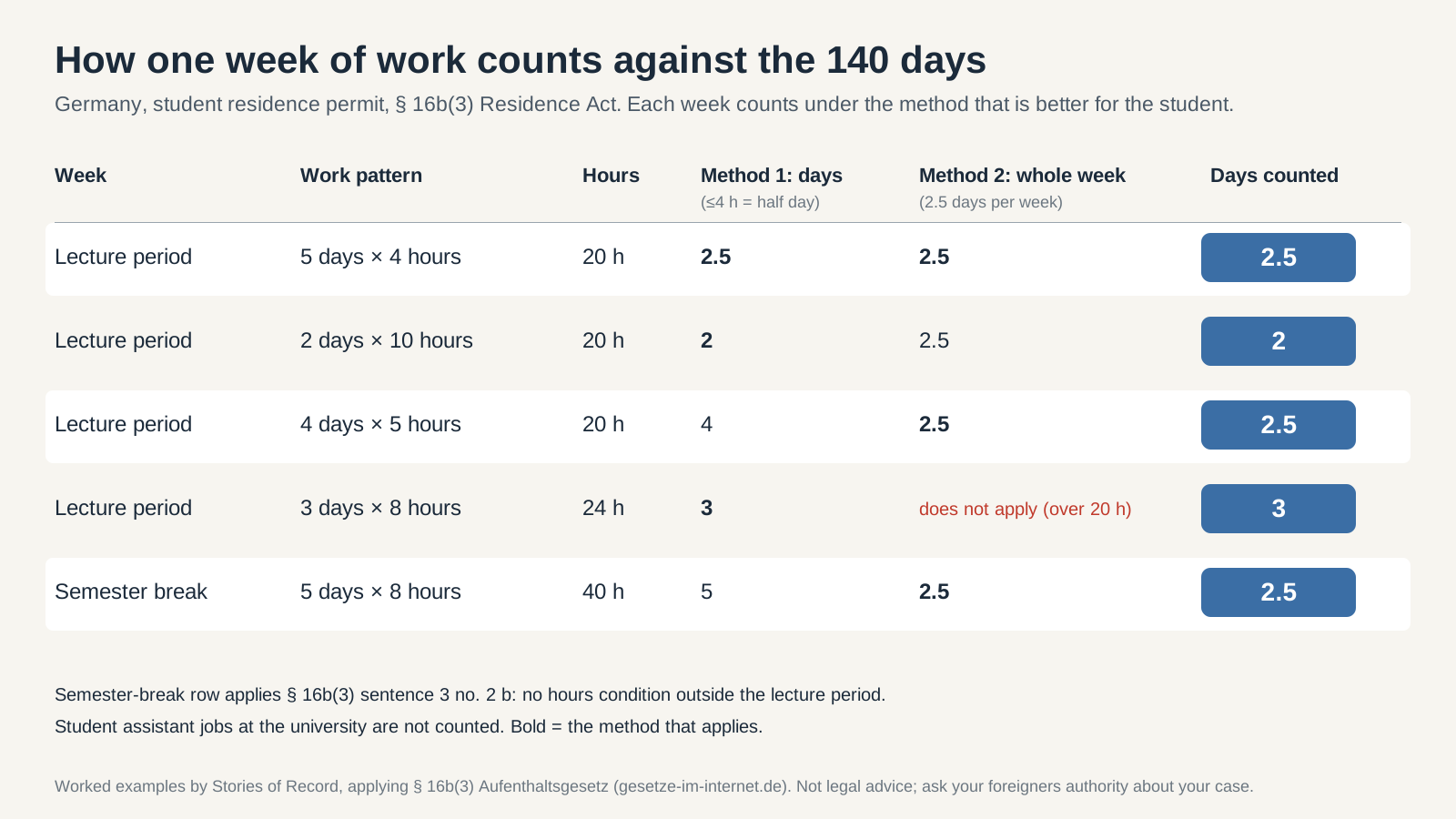
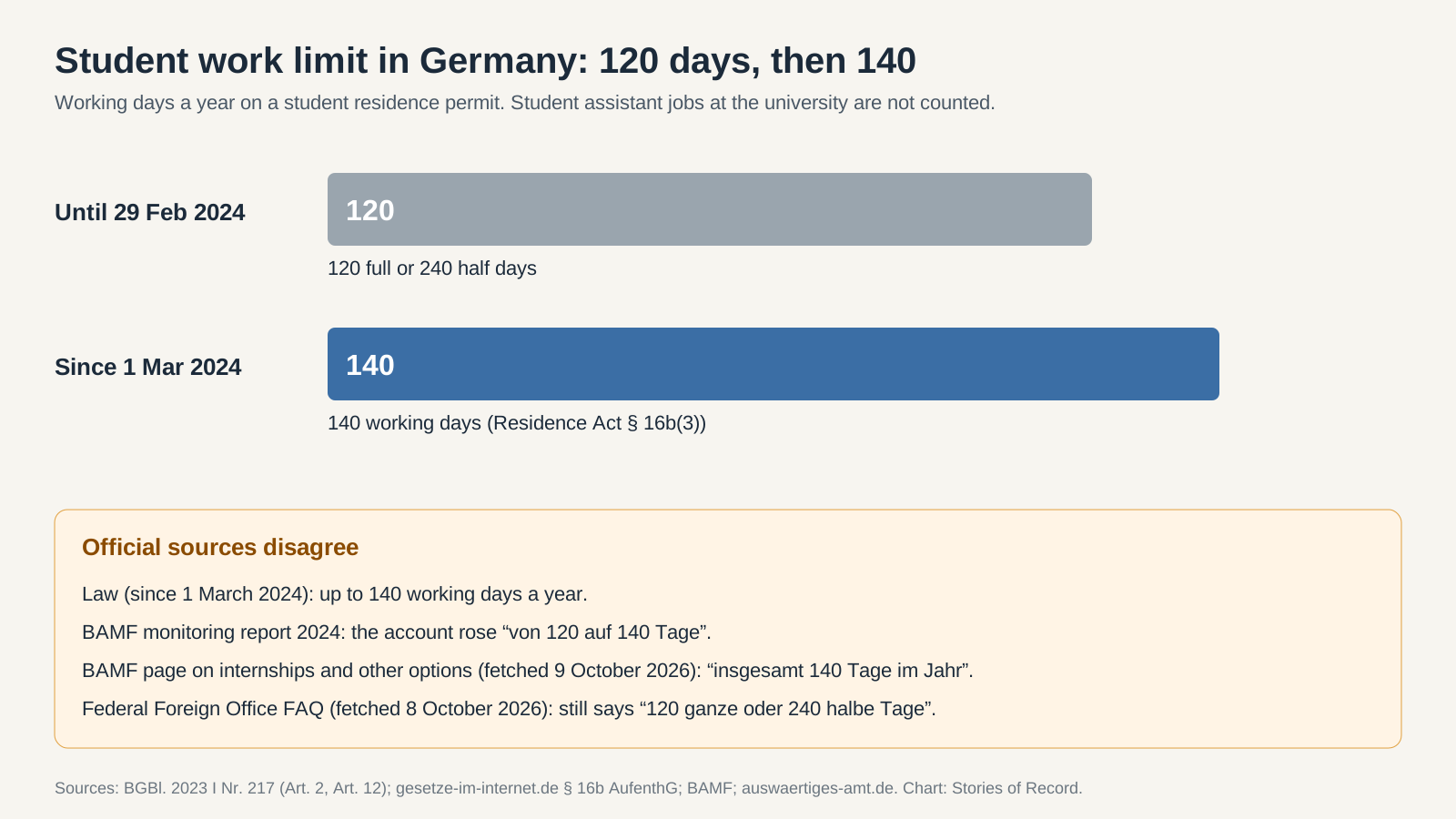
Since 1 March 2024, a German student residence permit allows up to 140 working days of paid work a year, up from 120. A day of up to four hours counts as half a day. Alternatively a part-time week counts as two and a half days, during the lecture period only if it stays within 20 hours. Student assistant jobs at the university do not count.
 Illustration
Students with a German study permit may work up to 140 days a year. Each week counts under whichever of two methods is better for them.
- Last changed:
Count your 140 working days
This counter has not been re-verified recently, so it is switched off rather than risk showing an old rule. Read § 16b of the Residence Act or ask your foreigners authority (Ausländerbehörde).
| Week | Counts as |
|---|---|
| Lecture period: 5 days of 4 hours (20 hours) | 2.5 days: by day 2.5, whole week 2.5 |
| Lecture period: 3 days of 8 hours (24 hours) | 3 days: by day 3, whole week not allowed (over 20 hours) |
| Semester break: 5 days of 8 hours (40 hours) | 2.5 days: by day 5, whole week 2.5 |
| Any week: one day of 3 hours | 0.5 days: by day 0.5, whole week 2.5 |
In the semester-break example, § 16b(3) b) counts a week outside the lecture period as 2.5 days however the working time is spread, and sets no 20-hour limit as it does in the lecture period, so this counter counts 40 hours as 2.5 days. The rule is written for part-time work (Teilzeitbeschäftigungen), so ask your foreigners authority how it treats a full-time week before relying on it.
| Lecture period | Days up to 4 hours | Longer days | Hours that week | Counts as |
|---|
Each week counts once, under whichever method gives the lower number: every day of up to 4 hours as half a day and any longer day as a full day, or the whole week as 2.5 days. In the lecture period the 2.5-day count needs the week to stay within 20 hours. § 16b(3) sets no hours condition outside the lecture period; ask your foreigners authority about full-time work then. Leave out student assistant jobs at your university, which do not count. The law does not say which 12 months make up your year, so ask your foreigners authority which ones count. Rule from § 16b(3) of the Residence Act cited on this page; values from version 1 of this record, last verified 9 October 2026. Information, not legal advice.
Latest update
First version: the 140-day limit in force since 1 March 2024, the two ways a week is counted, and the Foreign Office answer that still says 120.
What changed in this version
Version 1, : Record created.
Key facts
- A student residence permit allows paid work of up to 140 working days a year in total, counted on what the law calls a working-day account. [1]
- Under the second method, a calendar week of part-time work counts as two and a half working days, however the hours are spread. During the lecture period this applies only to weeks of up to 20 hours; outside the lecture period the law sets no such hours condition. [1]
- Those changes took effect on 1 March 2024. They raised the yearly limit for students from 120 days to 140, according to the Federal Office for Migration and Refugees. [5] [6]
Record history (timeline)
What is confirmed
- Jobs as a student assistant at the university do not count towards the yearly limit. [1]
- A compulsory internship that is part of the course is covered by the study permit itself: the law counts it as part of the purpose of study. [1]
- According to the same BAMF page, a voluntary internship counts as regular work against the yearly limit even when it is unpaid, while internships required by the study regulations (compulsory internships) are exempt from it. [2]
- Under the first counting method, a day with up to four hours of work counts as half a working day, and a longer day counts as a full day. [1]
- Each calendar week is counted separately under whichever method is better for the student. [1]
- A separate 20-hour rule applies to working-student (Werkstudent) status in social insurance, not to the residence permit's day count. The Federal Employment Agency's student jobs page says it usually means at most 20 hours a week during the semester, and well over 20 hours a week in the semester break without losing that status. [3]
- The rule comes from the Act to Further Develop Skilled Immigration, published in the Federal Law Gazette in August 2023, which rewrote the student work section of the Residence Act. [4] [5]
- The same law raised the side-job allowance for people in vocational training from 10 to 20 hours a week. [6] [5]
- A Federal Foreign Office FAQ answer on working while studying still gives the old limit of 120 full or 240 half days a year. [7]
- The Federal Office for Migration and Refugees' page on internships and other options also gives 140 days a year for students from outside the EU and EEA, and says working more needs permission from the foreigners authority and the Federal Employment Agency. [2]
- A student residence permit is usually issued or extended for two years, and for at least one year. [1]
- Students must also show they can support themselves. The Residence Act ties the monthly amount to the student need set in the BAföG grant law: 475 euros plus 380 euros for housing away from parents, plus health and care insurance supplements of 102 and 35 euros. [8] [9] [10]
- A blocked bank account is one way to prove this. Only a set amount can be withdrawn each month, and the Foreign Office says the exact sum for each purpose of stay is on the website of the German mission abroad. [11]
What remains unconfirmed
No open questions are being tracked.
Why it matters
The limit decides how much a student may work alongside their studies, and counting it week by week is not simple. One official Foreign Office answer still gives the old 120-day limit, so students reading it may turn down work they are allowed to do.
Questions
How many days can international students work in Germany?
Up to 140 working days a year on a student residence permit, since 1 March 2024. Student assistant jobs at the university are not counted.
Is it 120 or 140 days?
140. The limit rose from 120 to 140 days on 1 March 2024. The Residence Act and the BAMF's own page both say 140, but a Federal Foreign Office FAQ answer still says 120 full or 240 half days.
How do half days work?
A day with up to four hours of work counts as half a working day. A longer day counts as a full day.
Can I work more than 20 hours a week?
For the residence permit, during the lecture period the whole-week method applies only to weeks of up to 20 hours, so a longer week is counted day by day. Outside the lecture period, the law sets no hours condition for the whole-week method, so a long semester-break week can still count as two and a half days (see the worked examples on this page). The rule is written for part-time work, so ask your foreigners authority how it treats a full-time week. Separately, working-student status in social insurance has its own 20-hour rule during the semester. Ask your foreigners authority how this applies to your job.
How much money do I need for a student visa?
The Residence Act ties the monthly amount to the BAföG student need: 475 euros plus 380 euros for housing, plus insurance supplements of 102 and 35 euros. The German mission abroad publishes the exact sum for your purpose of stay.
Is a compulsory internship covered by a student permit?
Yes. Section 16b(1) of the Residence Act says the purpose of study includes completing a compulsory internship, and the BAMF says internships required by the study regulations are exempt from the yearly day limit. A voluntary internship counts as regular work against the limit, even when unpaid.
Sources
- Gesetze im Internet (Federal Ministry of Justice) Original documentRetrieved: 8 October 2026
- Federal Office for Migration and Refugees (BAMF) Official (government)Retrieved: 9 October 2026
- Federal Employment Agency (Bundesagentur für Arbeit) Official (government)Retrieved: 9 October 2026
- Bundesgesetzblatt (Federal Law Gazette) Original documentRetrieved: 8 October 2026
- Bundesgesetzblatt (Federal Law Gazette) Original documentRetrieved: 8 October 2026
- Federal Office for Migration and Refugees (BAMF) Official (government)Retrieved: 8 October 2026
- Gesetze im Internet (Federal Ministry of Justice) Original documentRetrieved: 8 October 2026
- Gesetze im Internet (Federal Ministry of Justice) Original documentRetrieved: 8 October 2026
- Gesetze im Internet (Federal Ministry of Justice) Original documentRetrieved: 8 October 2026
- Federal Foreign Office (Auswärtiges Amt) Official (government)Retrieved: 8 October 2026
People, places and organizations
- organization
- Federal Office for Migration and Refugees
- organization
- Federal Foreign Office
Related stories
- Germany EU Blue Card salary threshold 2026: 50,700 euros, or 45,934.20 euros reduced, with 2024 and 2025
- Permanent residence in Germany: from 21 months to five years, every route to a settlement permit
- German citizenship: five years of residence since 27 June 2024, and the three-year route removed on 30 October 2025