
Work and study in Germany · German citizenship · Naturalisation · Nationality Act · Germany · Einbürgerung
German citizenship by naturalisation: how many years you need, and the three-year route that was removed
Naturalisation now requires five years of lawful residence. The three-year route for exceptional integration ended on 30 October 2025.
Last changed (version 1) · Last verified · Every earlier version
 Illustration
Under the Nationality Act, a foreign national who has lived lawfully and habitually in Germany for five years is entitled to naturalisation if the other conditions are met. The 2024 reform cut the regular period from eight years to five. It also added a route after three years for people with exceptional integration and German at level C1. A law that took effect on 30 October 2025 removed that three-year route, and the current text of the Act lists the subsection as repealed.
Latest update
First version: the cut from eight to five years in 2024, the three-year route added then and removed on 30 October 2025, and today's conditions, fees and test.
What changed in this version
Version 1, : Record created.
Key facts
- The Nationality Act entitles a foreign national to naturalisation on application after five years of lawful habitual residence in Germany, if identity and nationality are clear and the other conditions are met. [1] [2]
- The 2024 reform cut the regular residence period for naturalisation from eight years to five, according to the Federal Government. [4]
- The amending law took effect on 30 October 2025, ending the option of naturalisation after three years, according to the Federal Government. [4]
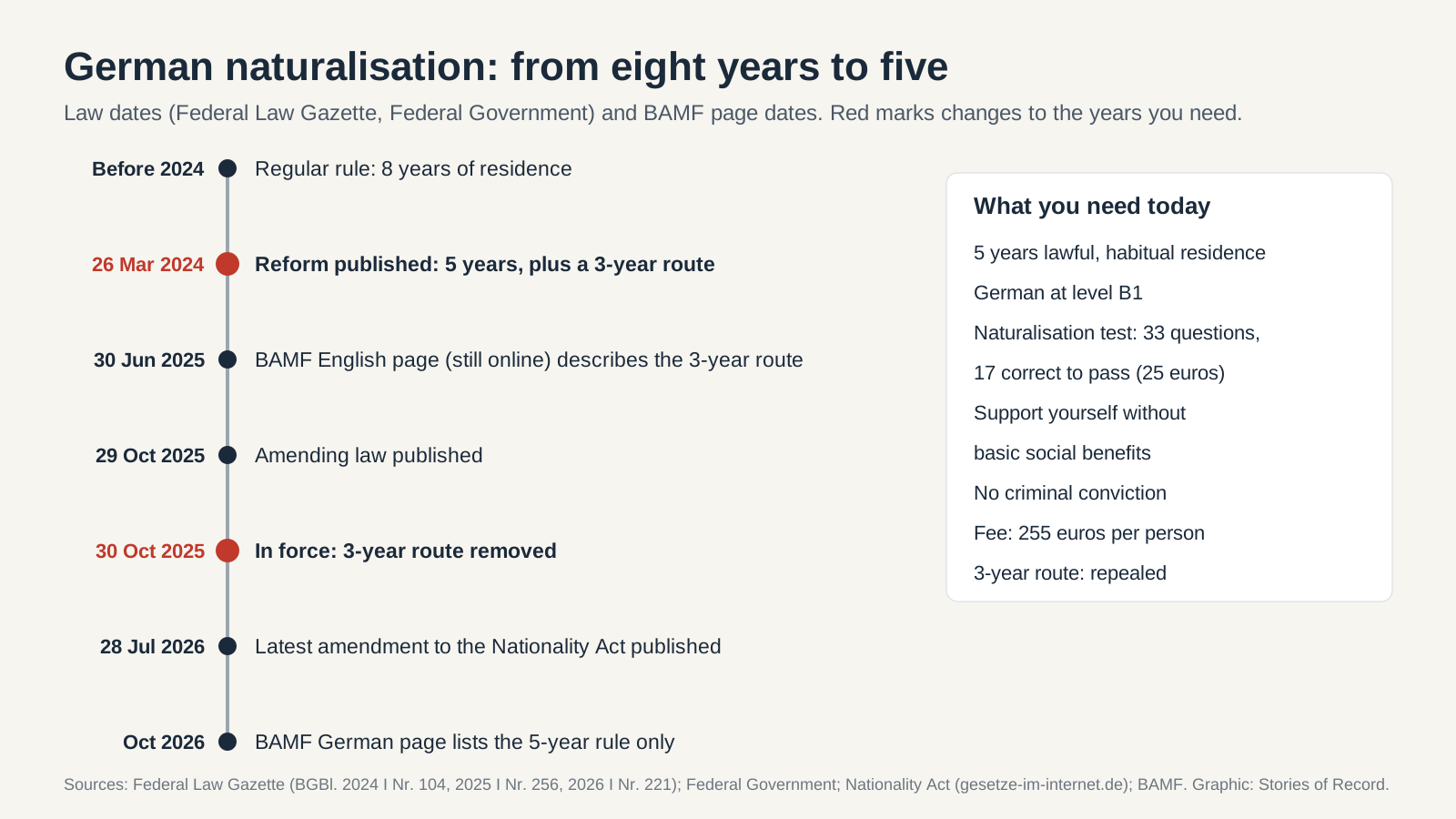
Timeline
- The consolidated Nationality Act on Gesetze im Internet was last amended by a law published in the Federal Law Gazette in July 2026. [7] [8]
- The amending law took effect on 30 October 2025, ending the option of naturalisation after three years, according to the Federal Government. [4]
- The Act Amending the Nationality Act and Other Provisions was published in the Federal Law Gazette in October 2025. [6]
- The Act to Modernise Nationality Law was published in the Federal Law Gazette in March 2024. [3]
What is confirmed
- The Act to Modernise Nationality Law was published in the Federal Law Gazette in March 2024. [3]
- The Act as amended in March 2024 allowed the five-year period to be cut to three years for people with an exceptional level of integration, such as outstanding achievement at school, at work or in the community. They also needed German at level C1 and had to be able to support themselves. [5]
- The Act Amending the Nationality Act and Other Provisions was published in the Federal Law Gazette in October 2025. [6]
- In the current text of the Nationality Act, the subsection that allowed naturalisation after three years is marked as repealed. Five years is now the shortest regular period. [1]
- The consolidated Nationality Act on Gesetze im Internet was last amended by a law published in the Federal Law Gazette in July 2026. [7] [8]
- BAMF's English naturalisation page, dated 30 June 2025, still says naturalisation is possible after three years for people with special integration achievements. BAMF's German page, updated in October 2026, lists only the five-year residence requirement. [9] [2]
- The language requirement is German at level B1, shown by passing a B1 language exam. [1]
- Other conditions include a commitment to Germany's free democratic order and to its historical responsibility for the Nazi regime, a qualifying residence status, supporting yourself and your dependants without basic social benefits, and no criminal conviction. [9]
- The naturalisation test has 33 multiple-choice questions in 60 minutes; 17 correct answers is a pass. It costs 25 euros. People with a German school-leaving certificate do not have to take it. [9]
- Naturalisation costs 255 euros per person, according to BAMF. The fee can be reduced or paid in instalments for people on low incomes. [9]
- Children born in Germany to foreign parents become German at birth, and can keep their parents' citizenship, if at least one parent has lived lawfully in Germany for more than five years and has a permanent right of residence. [2]
- A spouse or registered civil partner can be naturalised together with the applicant even if they have not yet lived in Germany for five years. [1]
What remains unconfirmed
No open questions are being tracked.
Why it matters
Anyone who planned around the three-year route now needs five years. Some official pages have not caught up: BAMF's English naturalisation page, dated June 2025, still describes the three-year option. BAMF's German page, updated in October 2026, does not. The residence period, the language level and the test decide when you can apply.
What happens next
No upcoming events are known.
Questions
How many years do I need to live in Germany to get citizenship?
Five years of lawful habitual residence under the Nationality Act, plus the other conditions such as B1 German, passing the naturalisation test and supporting yourself.
How many years did you need before 2024?
Eight years as the regular rule. The 2024 reform cut it to five, according to the Federal Government.
Can I still get German citizenship after three years?
No. The three-year route for exceptional integration, added in the 2024 reform, ended when the amending law took effect on 30 October 2025. The current Act lists that subsection as repealed.
Why does a BAMF page still mention three years?
BAMF's English naturalisation page is dated 30 June 2025, before the change took effect on 30 October 2025. The German page, updated in October 2026, lists only the five-year rule. Rely on the current law text and your naturalisation authority.
What does naturalisation cost?
255 euros per person, according to BAMF, with reductions or instalments possible on a low income. The test costs 25 euros.
Can my spouse apply with me?
Yes. A spouse or registered civil partner can be naturalised with you even if they have lived in Germany for less than five years.
Sources
- § 10 StAG - Einzelnorm, Gesetze im Internet (Federal Ministry of Justice)Original documentAccessed 7 October 2026.
- Einbürgerung in Deutschland, Federal Office for Migration and Refugees (BAMF)Official (government)Accessed 7 October 2026.
- Bundesgesetzblatt Teil I - Gesetz zur Modernisierung des Staatsangehörigkeitsrechts - Bundesgesetzblatt, Bundesgesetzblatt (Federal Law Gazette)Original documentAccessed 7 October 2026.
- Neue Regelungen für Einbürgerung | Bundesregierung, Federal Government of Germany (Bundesregierung)Official (government)Accessed 7 October 2026.
- Nationality Act, Gesetze im Internet (Federal Ministry of Justice)Original documentAccessed 7 October 2026.
- Bundesgesetzblatt Teil I - Gesetz zur Änderung des Staatsangehörigkeitsgesetzes sowie weiterer Vorschriften - Bundesgesetzblatt, Bundesgesetzblatt (Federal Law Gazette)Original documentAccessed 7 October 2026.
- StAG - Staatsangeh�rigkeitsgesetz, Gesetze im Internet (Federal Ministry of Justice)Original documentAccessed 7 October 2026.
- Bundesgesetzblatt Teil I - Gesetz zur besseren Verhinderung missbräuchlicher Anerkennungen der Vaterschaft und zur Änderung weiterer Vorschriften - Bundesgesetzblatt, Bundesgesetzblatt (Federal Law Gazette)Original documentAccessed 7 October 2026.
- Naturalisation in Germany, Federal Office for Migration and Refugees (BAMF)Official (government)Accessed 7 October 2026.
People, places and organizations
- organization
- Federal Office for Migration and Refugees
- organization
- Federal Ministry of the Interior