Senate passes H.R. 973, a bill for federal safety standards on e-bike batteries
The Senate passed H.R. 973 on 19 November without changes, its floor log shows. The bill would make federal e-bike battery rules binding, but only once it becomes law.
The Senate passed H.R. 973 by unanimous consent on 19 November, without changing the House text, the Senate's floor log shows. The House passed the bill in April 2025. If it becomes law, the Consumer Product Safety Commission (CPSC) gets 180 days to turn three industry safety standards for e-bike and scooter batteries into binding federal rules. None of the sources we cite says when the bill will be signed.
Key facts
- The Senate passed H.R. 973 by unanimous consent on 19 November, without amending the House-passed text, according to the Senate's floor log. Reuters also reported the vote. [1] [2]
- The House of Representatives passed the bill on 28 April 2025, the House-passed text published by the Government Publishing Office shows. [5] [6]
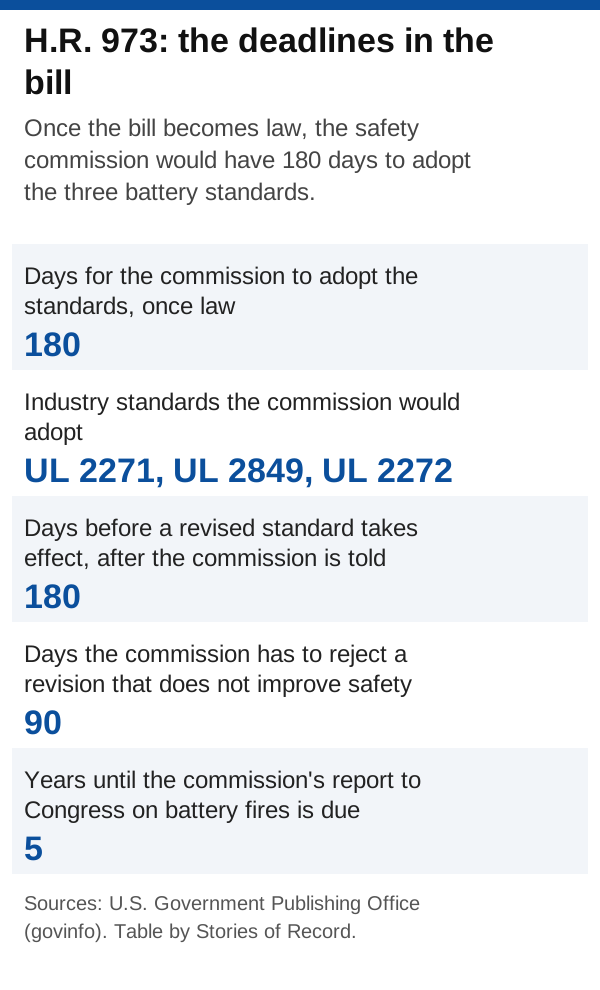
- Once the bill becomes law, the Consumer Product Safety Commission would have 180 days to adopt three existing industry standards from Underwriters Laboratories (UL) as final federal safety standards: UL 2271 for light electric vehicle batteries, UL 2849 for e-bike electrical systems and UL 2272 for personal e-mobility devices. [5]
Timeline
- On 24 April 2025 the bill came out of committee with House Report 119-77 and was sent to the full House. By then more House members, starting with Mr. Nadler, had signed on as sponsors. [4]
- Mr. Torres of New York introduced the bill in the House on 4 February 2025, joined by Mr. Garbarino, Ms. Clarke of New York and Mr. Langworthy. It went to the House Energy and Commerce Committee. [3]
What we know
- Mr. Torres of New York introduced the bill in the House on 4 February 2025, joined by Mr. Garbarino, Ms. Clarke of New York and Mr. Langworthy. It went to the House Energy and Commerce Committee. [3]
- On 24 April 2025 the bill came out of committee with House Report 119-77 and was sent to the full House. By then more House members, starting with Mr. Nadler, had signed on as sponsors. [4]
- The bill's short title is the Setting Consumer Standards for Lithium-Ion Batteries Act. [6]
- The new standards would apply only to consumer products, as the Consumer Product Safety Act defines them. [5]
- When the standards' authors revise one, the revision would become the federal standard 180 days after they notify the commission, unless the commission says within 90 days that the change does not improve safety. [5]
- The standards would carry the same force as any other consumer product safety rule the commission issues. [5]
- Within 5 years of the bill becoming law, the commission would have to report to the Senate Commerce Committee and the House Energy and Commerce Committee on fires, explosions and other hazards tied to these batteries. [5]
- Where known, that report would name the make and model of the battery and device involved, whether the battery met the new standard, and who made the battery and in which country. [5]
What we don't know yet
- Reuters described the bill as requiring the commission to set binding standards for lithium-ion batteries in e-bikes and other small electric vehicles. [2]
Why it matters
If you ride, sell or charge an e-bike or electric scooter, this bill would set one federal floor for the batteries and wiring in those products. Today the three standards it names are voluntary. Under the bill, battery packs sold to consumers would have to meet them. The bill also asks for a public count of battery fires. Within 5 years of becoming law, the commission would report to Congress on fires and explosions linked to these batteries, including the make and model involved where known.
Questions
Is the e-bike battery bill law now?
Not as far as our sources show. The Senate passed it on 19 November, after the House passed it in April 2025. None of the sources we cite says when, or whether, it will be signed.
When would the new battery rules start?
The clock starts only when the bill becomes law. From then, the Consumer Product Safety Commission would have 180 days to adopt the three standards as federal rules.
Which standards would become mandatory?
Three industry standards from Underwriters Laboratories (UL): UL 2271 for light electric vehicle batteries, UL 2849 for e-bike electrical systems and UL 2272 for personal e-mobility devices.
Does the bill cover every e-bike and scooter?
It covers consumer products as the Consumer Product Safety Act defines them. The bill limits the standards to that group.
What happens if the standards are updated later?
A revised standard would become the federal rule 180 days after its authors tell the commission, unless the commission objects within 90 days that the change does not make the product safer.
Who introduced the bill?
Mr. Torres of New York introduced it in the House on 4 February 2025, with Mr. Garbarino, Ms. Clarke of New York and Mr. Langworthy.
Updates
- First published.
Every version of this story, as first published.
Sources
- U.S. Senate Official (government)Retrieved: 21 November 2026
- Reuters News organizationPublished: 21 November 2026Reported by Reuters; credited as reported, not opened by us
- U.S. Government Publishing Office (govinfo) Original documentRetrieved: 21 November 2026
- U.S. Government Publishing Office (govinfo) Original documentRetrieved: 21 November 2026
- U.S. Government Publishing Office (govinfo) Original documentRetrieved: 21 November 2026
- U.S. Government Publishing Office (govinfo) Original documentRetrieved: 21 November 2026
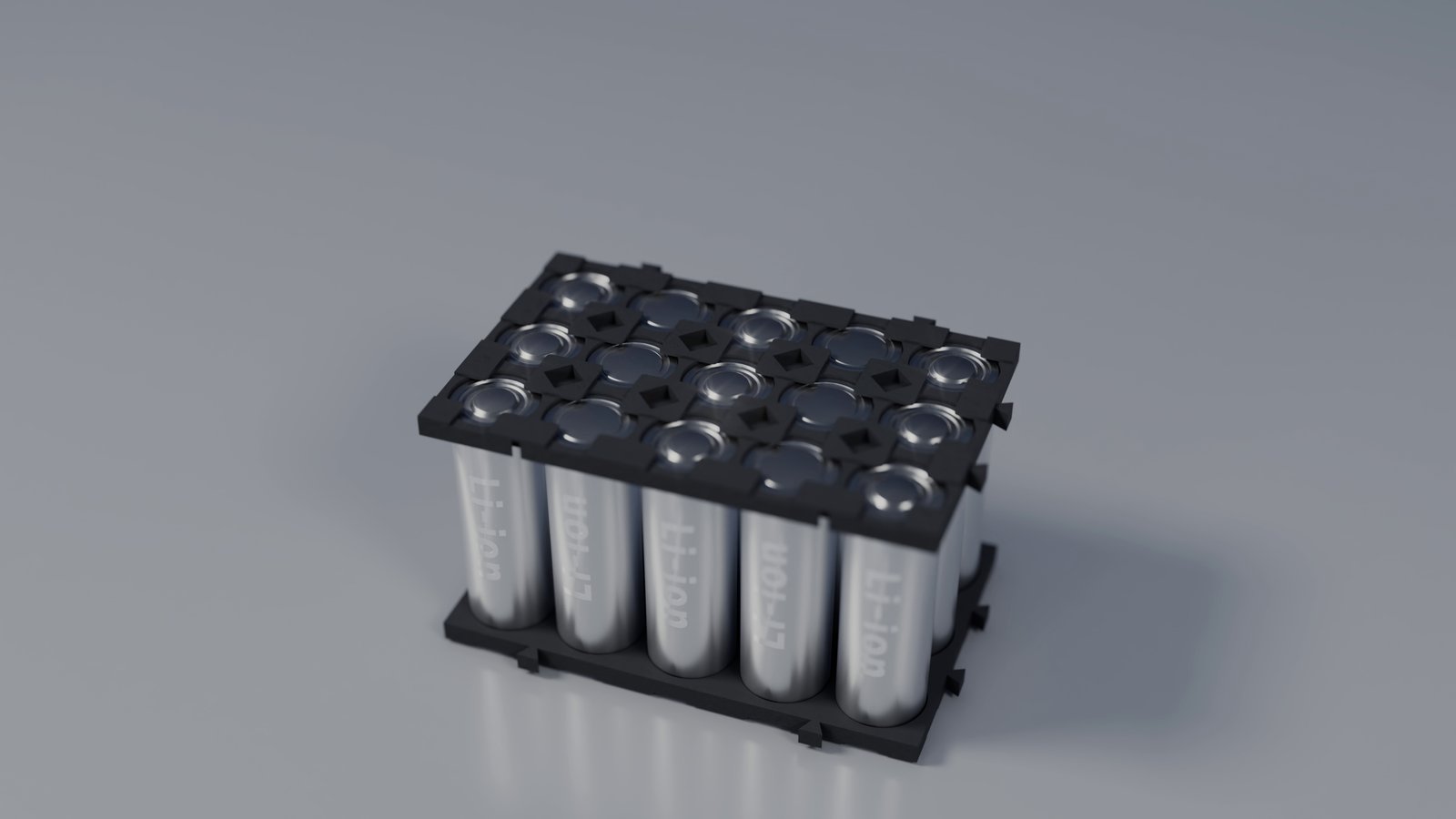
About the picture: this is a stock photo from Storyblocks. It does not show the people, places or events in this story.
People, places and organizations
- Topic
- Setting Consumer Standards for Lithium-Ion Batteries Act (H.R. 973)
- Organization
- U.S. Consumer Product Safety Commission
- Organization
- United States Senate
- Organization
- United States House of Representatives
Follow us on Facebook
We post new records on our Facebook Page.
Follow on Facebook