Germany's Chancenkarte (opportunity card): the points, the rules and how to score six
Since 1 June 2024, Germany's Chancenkarte (opportunity card) has let people from outside the EU come to Germany for up to a year to look for work. Skilled workers with a recognised qualification qualify directly. Everyone else needs a qualification recognised where it was obtained, German at A1 or English at B2, and at least six points. Points come from recognition, German, English, experience, a shortage occupation, age, a past stay in Germany and a partner who also applies. Applicants must also show they can support themselves.
 Illustration
Germany's Chancenkarte lets people look for work in Germany for up to a year. Skilled workers qualify directly; others need six points.
- Last changed:
Check your Chancenkarte points
This calculator has not been re-verified recently, so it is switched off rather than risk showing an old rule. Read § 20b of the Residence Act.
1. Basic requirements (no points, all needed)
How the qualification is shown, according to the Federal Employment Agency: the Central Office for Foreign Education (ZAB) checks whether it is recognised where you got it. For a degree it issues a statement of comparability (Zeugnisbewertung), which you do not need if your university is listed as "H+" in the anabin database and your degree as "entspricht" or "bedingt vergleichbar". For vocational training it issues a digital information on the qualification (Digitale Auskunft zur Berufsqualifikation), or a partial recognition notice (Teilanerkennungsbescheid) can serve as proof.
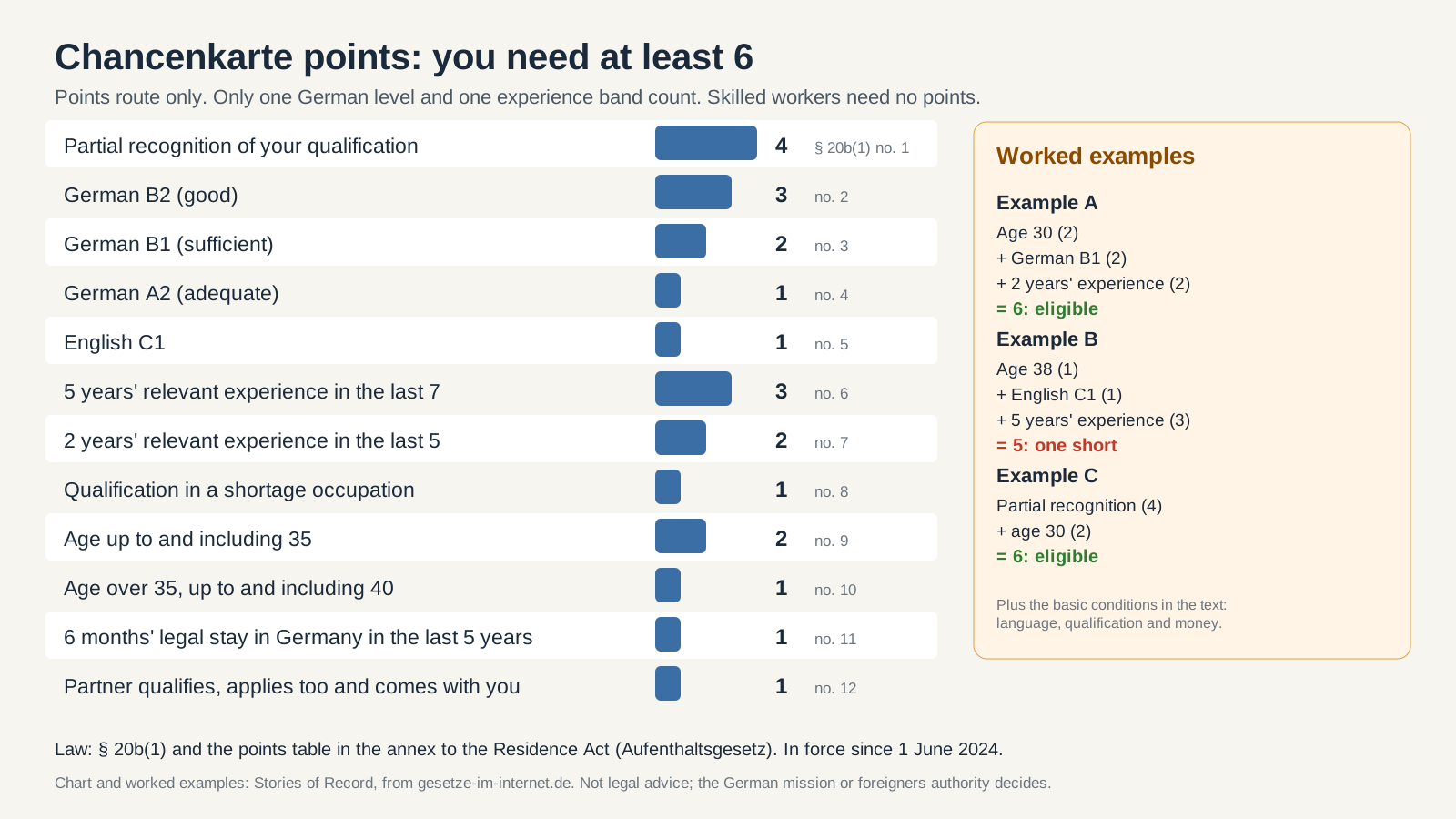
2. Points (at least 6)
Points within a group do not add up: only your highest German level counts (B2 gives 3 points, not 3 + 2 + 1), and only one of the two experience bands. English at C1 adds 1 point on top of German.
The shortage-occupation point is for a qualification recognised where you got it (§ 20b no. 8 refers to § 20a(4) sentence 3 no. 1). The recognition points stand in for that qualification, so the law does not make clear whether the two count together. Ask the embassy or foreigners authority before relying on that point.
You need at least 6 points and, on the points route, both basic conditions: a qualification recognised where you got it (not needed if you score the 4 recognition points) and German at A1 or English at B2. Only your highest German level counts, and only one of the two experience criteria. The money figure is the Federal Employment Agency's usual €1,091 a month (2026). Points from § 20b and its annex, cited on this page; values from version 1 of this record, last verified 10 October 2026. The embassy or foreigners authority decides. Information, not legal advice.
Latest update
First version: the Chancenkarte rules and points table under §§ 20a and 20b of the Residence Act, the money needed, and how official summaries word the age points.
What changed in this version
Version 1, : Record created.
Key facts
- The minimum score is six points. [5]
- Points are awarded per criterion: partial recognition of the qualification 4; German at B2 3, at B1 2, at A2 1; English at C1 1; five years of relevant experience in the last seven 3, or two years in the last five 2; a qualification in a shortage occupation 1; age up to 35 2, or over 35 up to 40 1; six months' legal stay in Germany in the last five years 1; a spouse or registered partner who also qualifies, applies at the same office and enters Germany with the applicant, or intends to, 1. [5] [6]
- Applicants must be able to support themselves for the whole stay. The Federal Employment Agency says this usually means "1.091 Euro pro Monat" as of 2026, proven for example with a blocked account or a formal declaration of commitment. [1] [7]
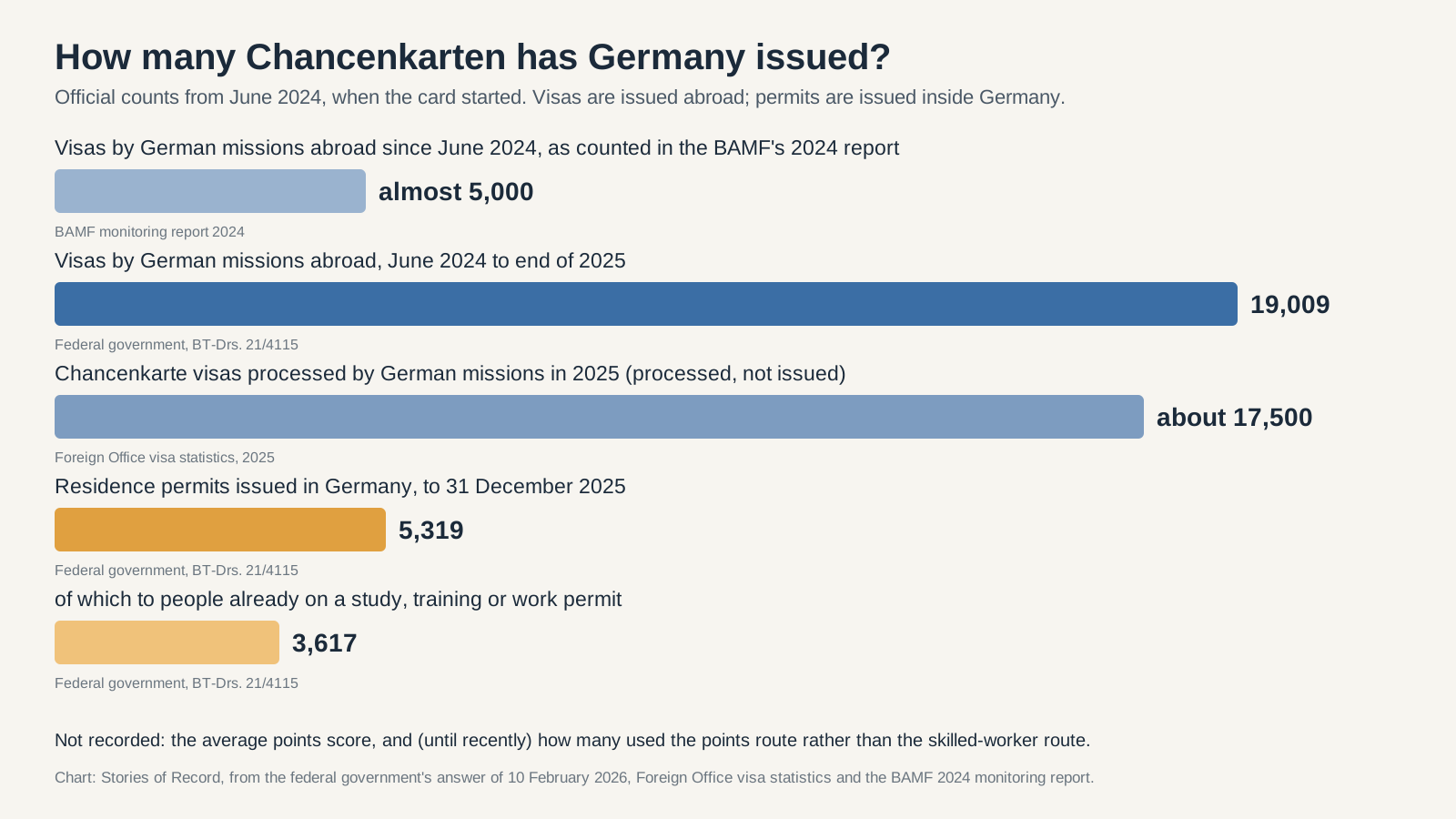
- From 1 June 2024 to the end of 2025, German missions abroad issued "19.009 Visa" for the Chancenkarte, the federal government told the Bundestag in February 2026. By 31 December 2025, authorities in Germany had also issued "5.319 Aufenthaltserlaubnisse" for it, "3.617 Personen" of them to people who already held a permit for study, training or work. [9]
Record history (timeline)
What is confirmed
- Germany's Chancenkarte (opportunity card) is a residence permit for looking for work, or for measures to get a foreign qualification recognised. [1]
- The card was created by the Act to Further Develop Skilled Immigration and has been available since 1 June 2024. [2] [3]
- There are two ways to qualify: being a skilled worker (Fachkraft) with a German or recognised qualification, or scoring enough points. [1]
- On the points route, applicants must first have a qualification recognised by the state where it was obtained (vocational training of at least two years, or a university degree) or a qualification from a German chamber of commerce abroad, and must show basic German (A1) or English at B2. [1] [4]
- In German law, good German means level B2, sufficient German B1 and adequate German A2. [4]
- The law gives two age points to applicants not older than 35 when they apply, and one point to those older than 35 but not older than 40, so an applicant aged exactly 35 still gets two points. [6]
- The Federal Employment Agency's newsletter summary describes the age points as "under 35" and "under 40", which is narrower than the law's wording. [7]
- Applicants on the points route must have a German expert body confirm that their foreign vocational qualification or degree meets these conditions. [1]
- Someone already in Germany can get the card only if they hold a residence title for education (Part 3 of the Residence Act) or for employment (Part 4), so a student permit counts. [1] [8]
- An applicant who earns the four points for partial recognition does not also need to meet the basic qualification requirement. [6]
- With the card, holders may work up to 20 hours a week on average and take trial jobs of up to two weeks each. [1]
- The card is first issued for up to one year. It can be extended once by up to two years if the holder has a contract or binding offer for a qualified job and the Federal Employment Agency has agreed. This follow-up card is granted only if the holder does not qualify for another employment residence permit, and no further extension as a Chancenkarte is possible. [1] [8]
- A new search card is possible only after spending at least as long outside Germany, or legally in Germany on another basis, as the previous card's stay. [1]
- The federal government may cap the number of cards issued to people not yet in Germany by regulation. [1]
- The Foreign Office says German missions processed "rd. 17.500 Chancenkarten" in 2025, out of "rd. 111.000 nationale Visa" for work and skilled migration. That is a count of applications processed, not of cards issued. [10]
- The BAMF's 2024 monitoring report counted almost five thousand Chancenkarte visas in the first months, from June 2024. [3]
- The government says the statistics do not record the average points applicants score, and only the Foreign Office's visa statistics have recently started to separate the skilled-worker route from the points route. [9]
- According to the Federal Employment Agency, the Central Office for Foreign Education (ZAB) checks whether a qualification is state-recognised where it was obtained. For degrees it issues a statement of comparability, which is not needed if the anabin database lists the university as H+ and the degree as equivalent or partly comparable. For vocational training it issues a digital information on the qualification; a partial recognition notice also counts. [7]
- From abroad, the card is issued as a national (D) visa by a German mission; the fee for a national visa is 75 Euro. [3] [11]
- The 20-hour weekly limit and the trial-job rule apply only to the search card, not to the follow-up card. The search card needs no approval from the Federal Employment Agency, and trial jobs must be qualified work. [1] [7]
- People who graduate from a German university, or finish qualified vocational training in Germany, can get a separate job-search permit instead of the Chancenkarte, for up to 18 months, which needs no points but does require them to support themselves. [12]
What remains unconfirmed
No open questions are being tracked.
Why it matters
The points rules sit in a table in an annex to the Residence Act and are easy to misread. Official summaries word the age points differently from the law, and the money needed depends on a figure the Federal Employment Agency updates each year.
Questions
How many points do I need for the Chancenkarte?
At least six, from the table in the annex to the Residence Act. Skilled workers with a German or recognised qualification need no points.
How many people have got a Chancenkarte?
German missions issued "19.009 Visa" for it from June 2024 to the end of 2025, and authorities in Germany issued "5.319 Aufenthaltserlaubnisse" by 31 December 2025, according to the federal government. The Foreign Office counted "rd. 17.500 Chancenkarten" processed in 2025, which counts applications handled, not cards issued. Average points scores are not recorded.
Do I get the age points if I am exactly 35?
Yes, under the law: two points go to applicants not older than 35 when they apply, and one point to those older than 35 but not older than 40. A Federal Employment Agency summary says "under 35", which is narrower than the law.
How much money do I need?
You must be able to support yourself for the whole stay. The Federal Employment Agency says this usually means "1.091 Euro pro Monat" (Stand 2026), for example in a blocked account. Check the figure with the German mission where you apply.
Can I work with a Chancenkarte?
Yes, up to 20 hours a week on average, plus trial jobs of up to two weeks each. With a contract or binding offer for a qualified job, the card can be extended by up to two years.
Which language levels count?
For eligibility you need German at A1 or English at B2. For points, German B2 gives 3, B1 gives 2 and A2 gives 1, and English at C1 gives 1.
Can I apply again after my card runs out?
Only after spending at least as long outside Germany, or legally in Germany on another basis, as you spent on the previous search card.
Do I need my foreign qualification checked in Germany?
Yes, on the points route. The law requires a German expert body to confirm it. The Federal Employment Agency says this is the Central Office for Foreign Education (ZAB): a statement of comparability for degrees, unless anabin already lists the university as H+ and the degree as equivalent, or a digital information for vocational training. A partial recognition notice also counts.
Can I switch to a Chancenkarte while studying in Germany?
Yes, if you already hold a residence title for education or employment, such as a student permit; by the end of 2025, "3.617 Personen" had switched this way, according to the federal government. If you graduate in Germany, there is also a separate job-search permit for graduates: it lasts up to 18 months, needs no points, and requires you to support yourself.
How do I apply and what does it cost?
From abroad you apply for a national (D) visa at the German mission responsible for you; the fee for a national visa is 75 Euro. If you are already in Germany on a study, training or work permit, you apply for the card as a residence permit in Germany.
Can I work full time once I find a job?
Yes, with the follow-up card. The 20-hour limit and trial-job rule apply only to the search card. The follow-up card needs a contract or binding offer for qualified work and the Federal Employment Agency's approval, and is only granted if you don't qualify for another work permit.
Sources
- Gesetze im Internet (Federal Ministry of Justice) Original documentRetrieved: 10 October 2026
- Bundesgesetzblatt (Federal Law Gazette) Original documentRetrieved: 8 October 2026
- Federal Office for Migration and Refugees (BAMF) Official (government)Retrieved: 8 October 2026
- Gesetze im Internet (Federal Ministry of Justice) Original documentRetrieved: 8 October 2026
- Gesetze im Internet (Federal Ministry of Justice) Original documentRetrieved: 10 October 2026
- Gesetze im Internet (Federal Ministry of Justice) Original documentRetrieved: 10 October 2026
- Federal Employment Agency (Bundesagentur für Arbeit) Official (government)Retrieved: 10 October 2026
- Gesetze im Internet (Federal Ministry of Justice) Original documentRetrieved: 10 October 2026
- Deutscher Bundestag Official (government)Retrieved: 10 October 2026
- Federal Foreign Office (Auswärtiges Amt) Official (government)Retrieved: 10 October 2026
- Gesetze im Internet (Federal Ministry of Justice) Original documentRetrieved: 10 October 2026
- Gesetze im Internet (Federal Ministry of Justice) Original documentRetrieved: 10 October 2026
People, places and organizations
- organization
- Federal Office for Migration and Refugees
- organization
- Federal Employment Agency
Related stories
- Germany EU Blue Card salary threshold 2026: 50,700 euros, or 45,934.20 euros reduced, with 2024 and 2025
- Working while studying in Germany: the 140-day limit, how a week counts, and the official page that still says 120
- Permanent residence in Germany: from 21 months to five years, every route to a settlement permit
- German citizenship: five years of residence since 27 June 2024, and the three-year route removed on 30 October 2025