
Work and study in Germany · Settlement permit · Niederlassungserlaubnis · Permanent residence · Germany · EU long-term residence
Permanent residence in Germany: every route to a settlement permit and how long each takes
The general rule for a settlement permit is five years with a residence permit and 60 months of pension contributions. EU Blue Card holders can qualify after 21 months.
Last changed (version 1) · Last verified · Every earlier version
 Illustration
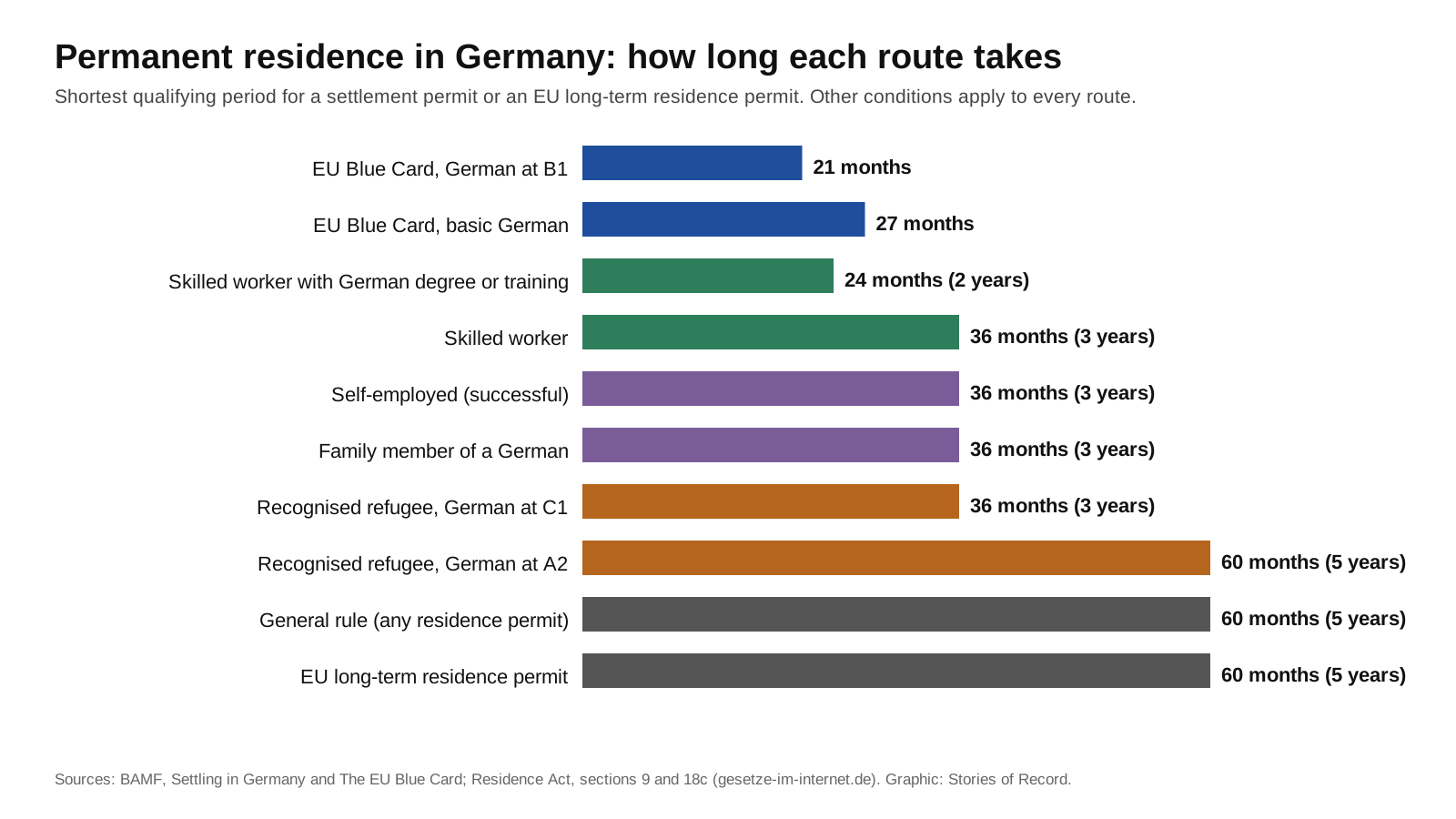
Germany has two open-ended residence titles: the settlement permit (Niederlassungserlaubnis) and the EU long-term residence permit. The general rule for a settlement permit is five years with a residence permit, 60 months of pension contributions and German at level B1. EU Blue Card holders can qualify after 21 or 27 months, depending on their German. Skilled workers who trained or studied in Germany need two years. Other skilled workers, the successful self-employed and family members of Germans need three.
Latest update
First version: every route to a German settlement permit with its qualifying period, pension months and German level, checked against the current Residence Act.
What changed in this version
Version 1, : Record created.
Key facts
- Under the general rule, a settlement permit is granted after five years with a residence permit, with at least 60 months of pension contributions, secure income, German at level B1, basic knowledge of the legal and social order, and adequate housing. [1] [2]
- EU Blue Card holders get a settlement permit after 27 months of Blue Card employment with pension contributions and basic German, or after 21 months with German at level B1. [3] [4]
- Skilled workers with vocational or academic training get a settlement permit after three years with a skilled-worker residence title, if they hold a job, have paid 36 months of pension contributions and have sufficient German. [2] [3]
Timeline
- BAMF's English guide to settling in Germany is dated March 2024. We checked its periods against the current text of the Residence Act. [2]
- The skilled-worker rules in force today come from the Act on the Further Development of Skilled Immigration, published in the Federal Law Gazette in August 2023. [6]
What is confirmed
- Time out of work for childcare or caring for a relative at home is credited towards the 60 months of pension contributions. [1]
- For skilled workers who completed vocational training or a degree in Germany, the periods shrink to two years and 24 months of contributions. [3]
- Successful self-employed people who can support themselves and their dependants may get a settlement permit after three years. [2]
- Family members of a German national get a settlement permit after three years with a residence permit, if the family unit continues in Germany and they have sufficient German. [2]
- Foreign nationals who are tenured civil servants of a German public employer get a settlement permit after three years, without the 60-month pension requirement. [2]
- People granted asylum or refugee protection can get a settlement permit after five years, counting the asylum procedure, with German at level A2; with German at level C1 and largely self-supporting, after three years. [2]
- The EU long-term residence permit is also open-ended and lets the holder settle in another EU country under that country's rules. It normally requires five years with a residence title, regular income and German at level B1. [2]
- For the EU long-term residence permit, Blue Card holders can count time spent with a Blue Card in other EU countries, not only time in Germany. [5]
- A settlement permit is valid indefinitely and allows stays in other Schengen countries of up to 90 days in any 180-day period. [2]
- The skilled-worker rules in force today come from the Act on the Further Development of Skilled Immigration, published in the Federal Law Gazette in August 2023. [6]
- BAMF's English guide to settling in Germany is dated March 2024. We checked its periods against the current text of the Residence Act. [2]
What remains unconfirmed
No open questions are being tracked.
Why it matters
The route you are on decides whether you can settle in under two years or need five, and each route counts pension months and German level differently. A settlement permit also ends the cycle of renewals.
What happens next
No upcoming events are known.
Questions
How long until I can get permanent residence in Germany?
Five years under the general rule. It can be 21 or 27 months on an EU Blue Card, two years for skilled workers who trained or studied in Germany, and three years for other skilled workers, the successful self-employed and family members of Germans.
What German level do I need?
B1 under the general rule and for the 21-month Blue Card route; basic German for the 27-month Blue Card route; A2 for recognised refugees on the five-year route, C1 on their three-year route.
How many months of pension contributions are needed?
60 months under the general rule, 36 months for skilled workers and 24 months for those who trained or studied in Germany. Blue Card holders need contributions for their 21 or 27 qualifying months.
What is the difference between a settlement permit and the EU long-term residence permit?
Both are open-ended. The EU long-term residence permit also lets you settle in another EU country under its rules, and Blue Card holders can count Blue Card time in other EU countries towards it.
Does a settlement permit let me travel in Europe?
BAMF says it allows stays in other Schengen countries of up to 90 days in any 180-day period.
Sources
- § 9 AufenthG - Einzelnorm, Gesetze im Internet (Federal Ministry of Justice)Original documentAccessed 7 October 2026.
- Settling in Germany, Federal Office for Migration and Refugees (BAMF)Official (government)Accessed 7 October 2026.
- § 18c AufenthG - Einzelnorm, Gesetze im Internet (Federal Ministry of Justice)Original documentAccessed 7 October 2026.
- The EU Blue Card, Federal Office for Migration and Refugees (BAMF)Official (government)Accessed 7 October 2026.
- Mobilität mit Blauer Karte EU, Federal Office for Migration and Refugees (BAMF)Official (government)Accessed 7 October 2026.
- Bundesgesetzblatt Teil I - Gesetz zur Weiterentwicklung der Fachkräfteeinwanderung - Bundesgesetzblatt, Bundesgesetzblatt (Federal Law Gazette)Original documentAccessed 7 October 2026.
People, places and organizations
- organization
- Federal Office for Migration and Refugees